The Situation
Gareth runs a single-bay MOT testing station on the outskirts of a South Wales market town. He's the only employee — he does the tests, answers the phone, handles the paperwork and chases the reminders. The business has been running for 11 years.
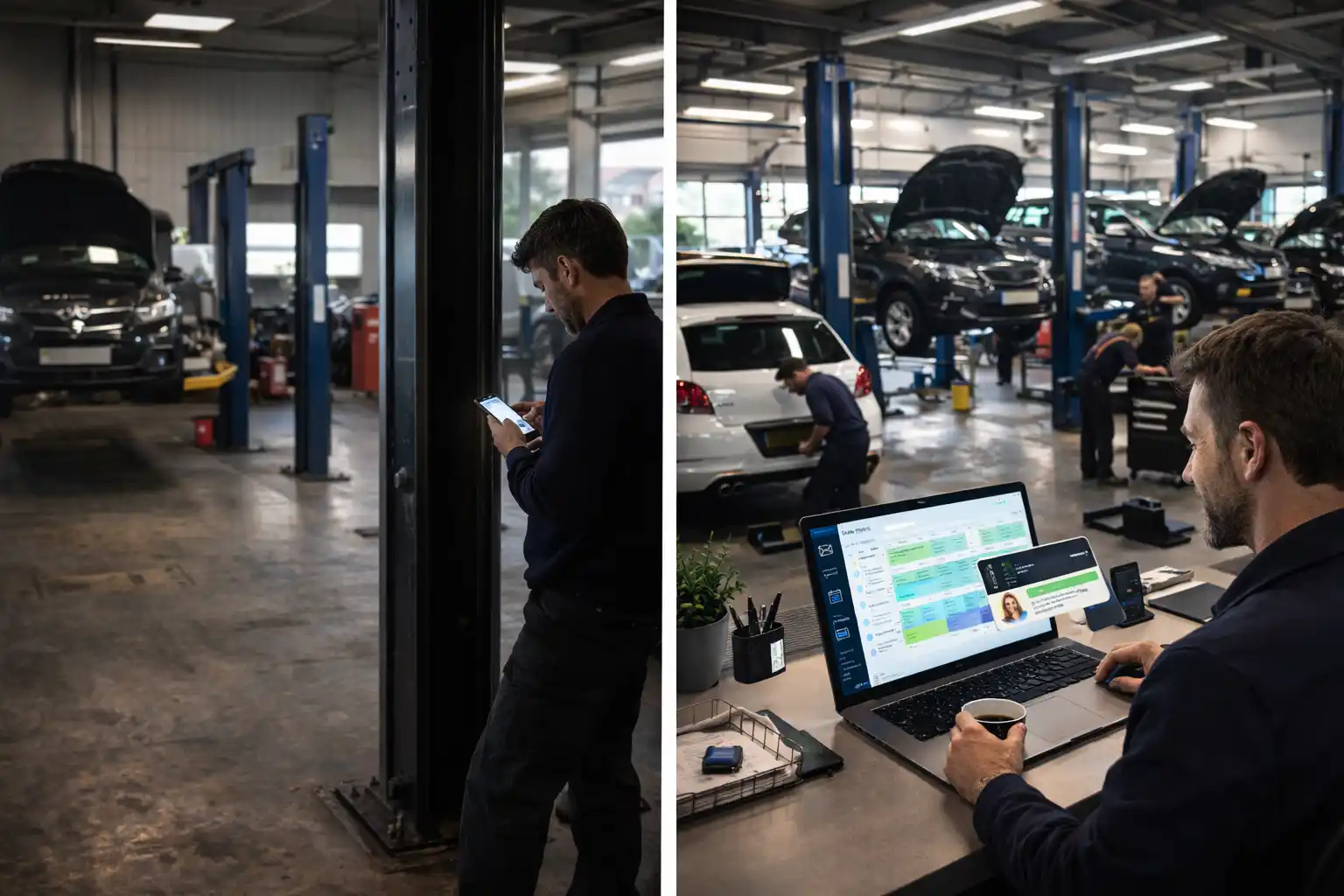
When we first spoke to Gareth, his systems looked like this: customer details written in a desk diary, MOT due dates on a wall-mounted whiteboard, job cards on carbonless paper pads, and invoices raised manually through a free online template. MOT reminders were sent by text message — when he remembered.
The Problem
The core issue wasn't that paper didn't work — it worked well enough for 11 years. The problem was what it couldn't do:
- No automated reminders — every SMS was typed and sent manually, one at a time
- No searchable customer history — finding a previous MOT meant flipping through stacked paper diaries
- No vehicle tracking — if a customer changed vehicle, the old records were effectively lost
- No follow-up on failures — MOT failures with advisory items were never chased for repair bookings
- No visibility of upcoming workload — the whiteboard showed the current week only
The Migration
Gareth started his free trial on a Monday morning. By lunchtime, he'd watched the onboarding video and set up his business profile. The migration happened that afternoon.
What was migrated
- Customer records — 400+ customers entered from the desk diary and a partial spreadsheet
- Vehicle registrations — linked to customer records with MOT due dates
- MOT history — last test date and result for active customers
How it was done
Gareth imported the spreadsheet portion directly (180 records) and entered the remaining customers manually over three hours while the bay was quiet. By 5pm, every active customer was live in My Garage CRM with their vehicle and MOT due date attached.
Before and After
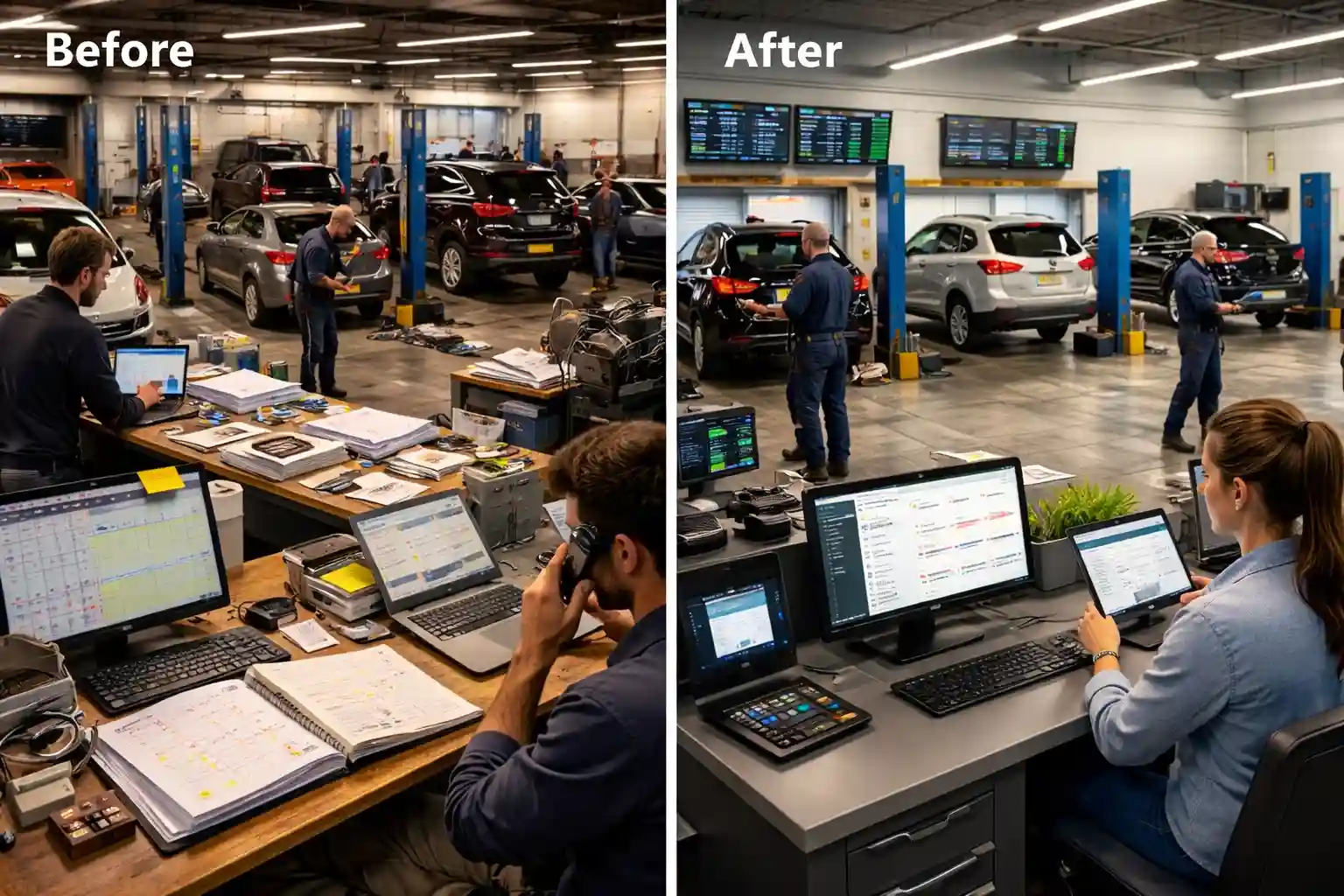
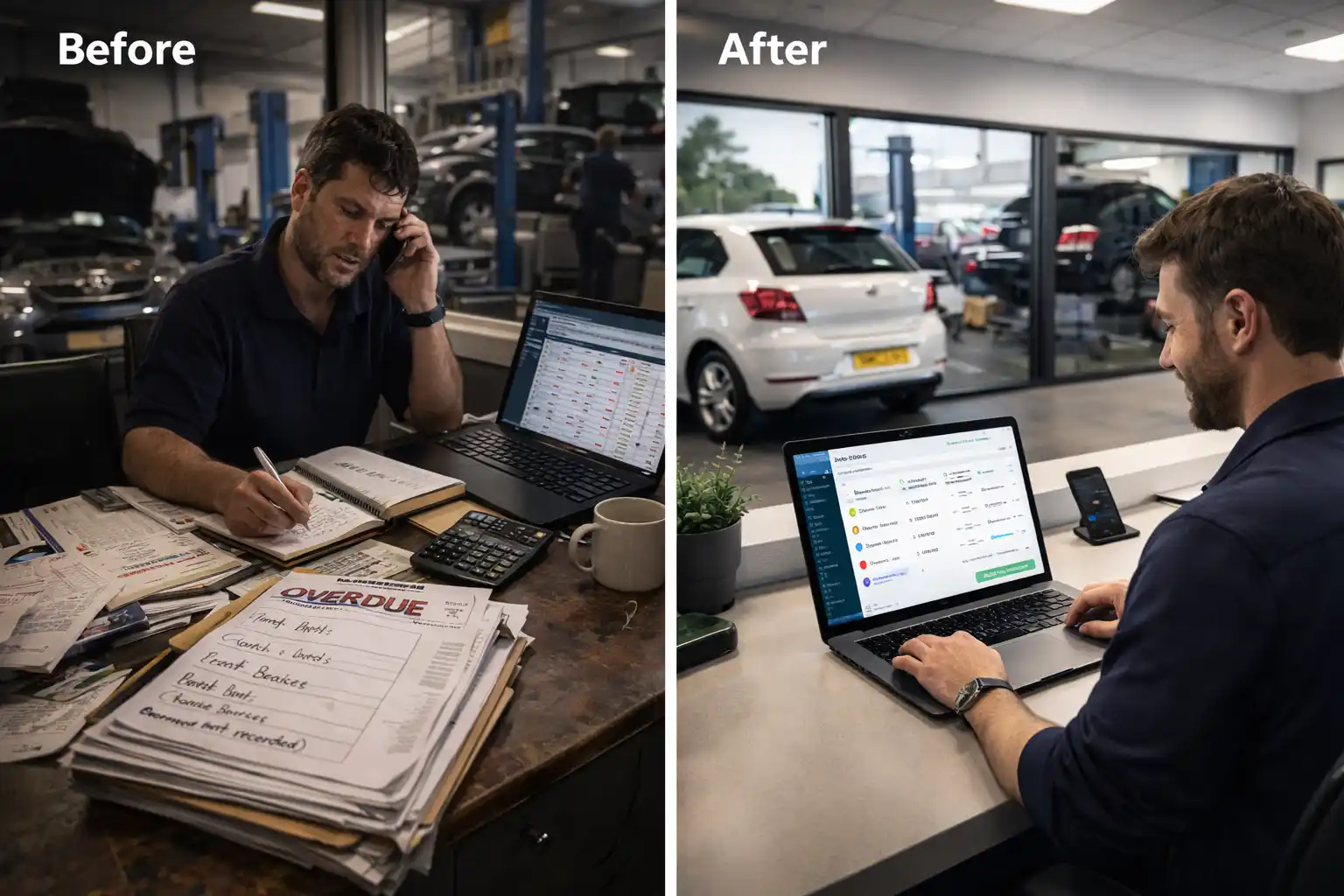
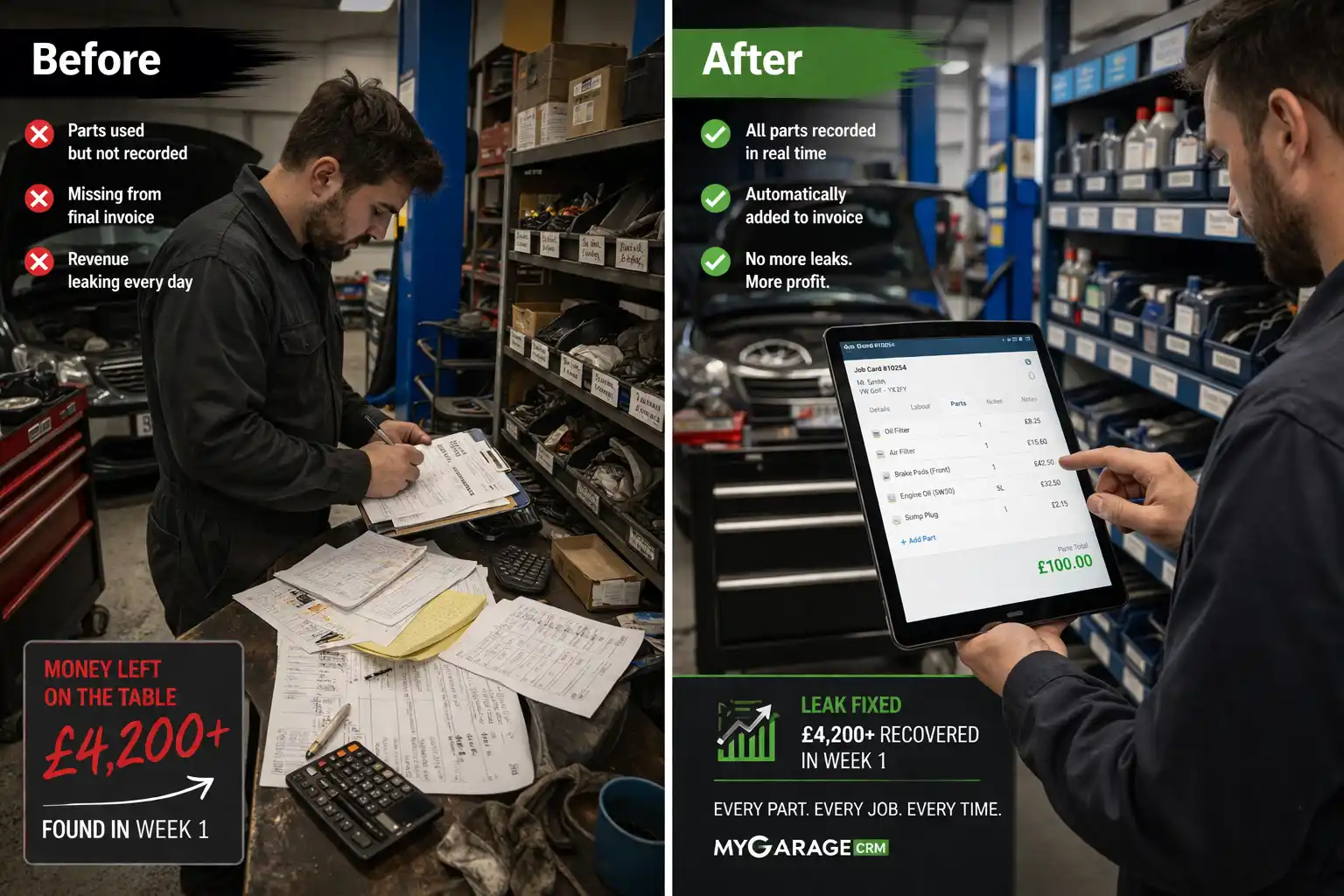
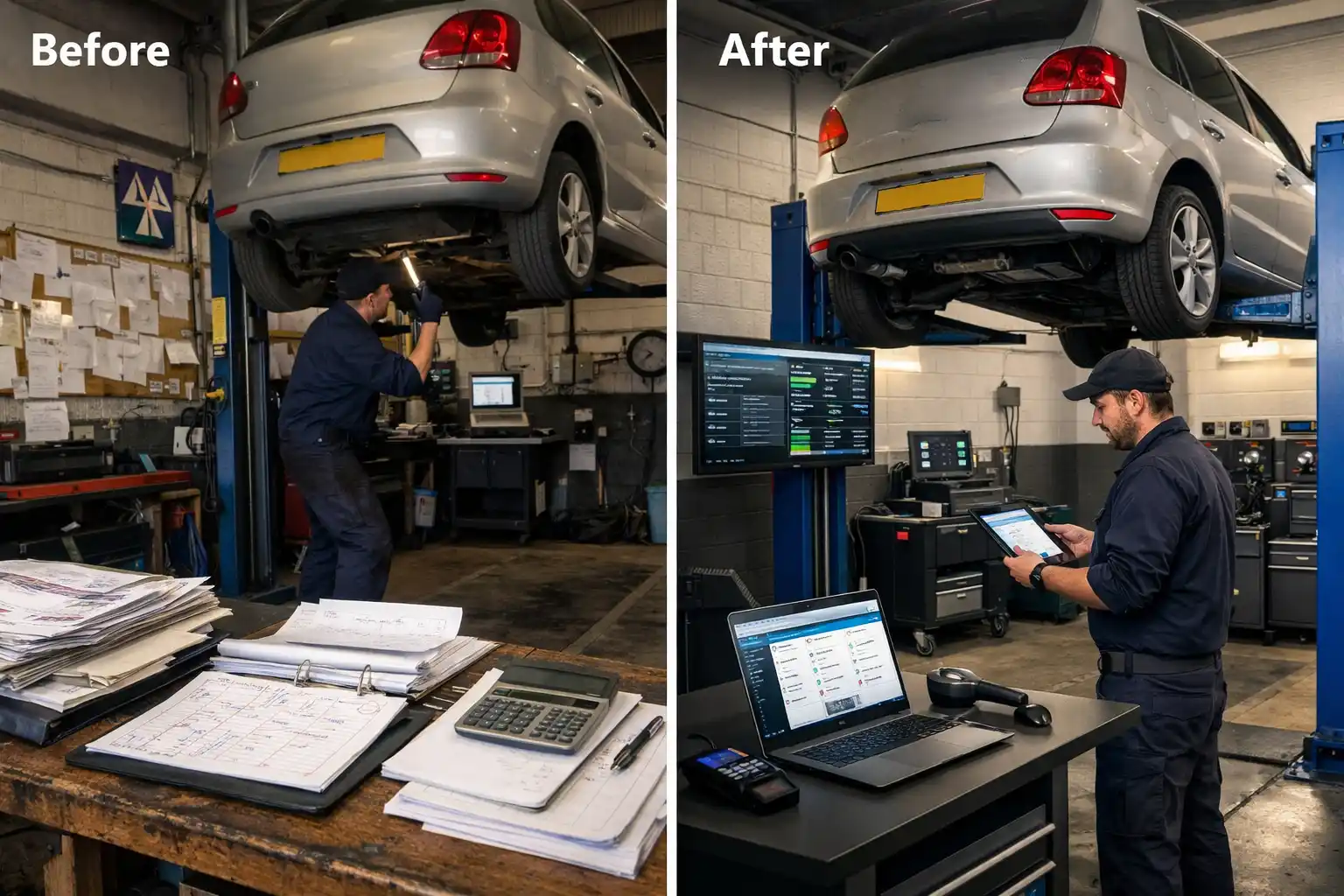
❌ Before
- Paper desk diary for bookings
- Whiteboard for MOT due dates
- Carbonless paper job cards
- Free invoice template (no VAT)
- Manual SMS reminders (when remembered)
- No searchable customer history
- No failure-to-repair follow-up
✅ After
- Digital diary with bay scheduling
- Automated MOT reminders (6w + 2w)
- Digital job cards linked to customers
- VAT-compliant invoicing in one click
- Full customer and vehicle history
- MOT failures auto-chased for repairs
- Searchable records from any device
Results After 90 Days
Three months after the migration, Gareth reported measurable changes across three areas:
MOT rebooking rate
Automated reminders now reach every customer at 6 weeks and 2 weeks before their MOT expires. Gareth estimates his rebooking rate has improved from around 50% to over 80% — meaning significantly fewer customers lapsing to competitors.
Failure-to-repair conversion
MOT failures with advisory items now generate automatic follow-up messages offering a repair booking. Gareth is converting approximately 30% of advisory items into paid repair work — revenue that was previously invisible.
Admin time
End-of-day paperwork that previously took 30–40 minutes is now handled as jobs are completed. Invoices are raised from the job card in one click. Gareth estimates he saves 2–3 hours per week on admin alone.
Key Takeaways
- Migration doesn't require downtime. Gareth migrated 400+ records in a single afternoon without closing the bay.
- Solo operators benefit the most from automation. When there's no one else to handle admin, automated reminders and one-click invoicing make the biggest difference.
- MOT advisory follow-up is hidden revenue. Failure-to-repair conversion is pure incremental income that paper systems simply cannot capture.
- The free plan is enough to start. Gareth began on the Starter plan at £0/month and upgraded after seeing results in the first month.