The Situation
Karen and her husband run a 3-bay independent garage in Nottinghamshire that's been operating for 14 years. MOTs account for approximately 30% of total revenue — both from the test itself and from the repair and advisory work that follows. The business has roughly 1,400 vehicles on record with MOT due dates.
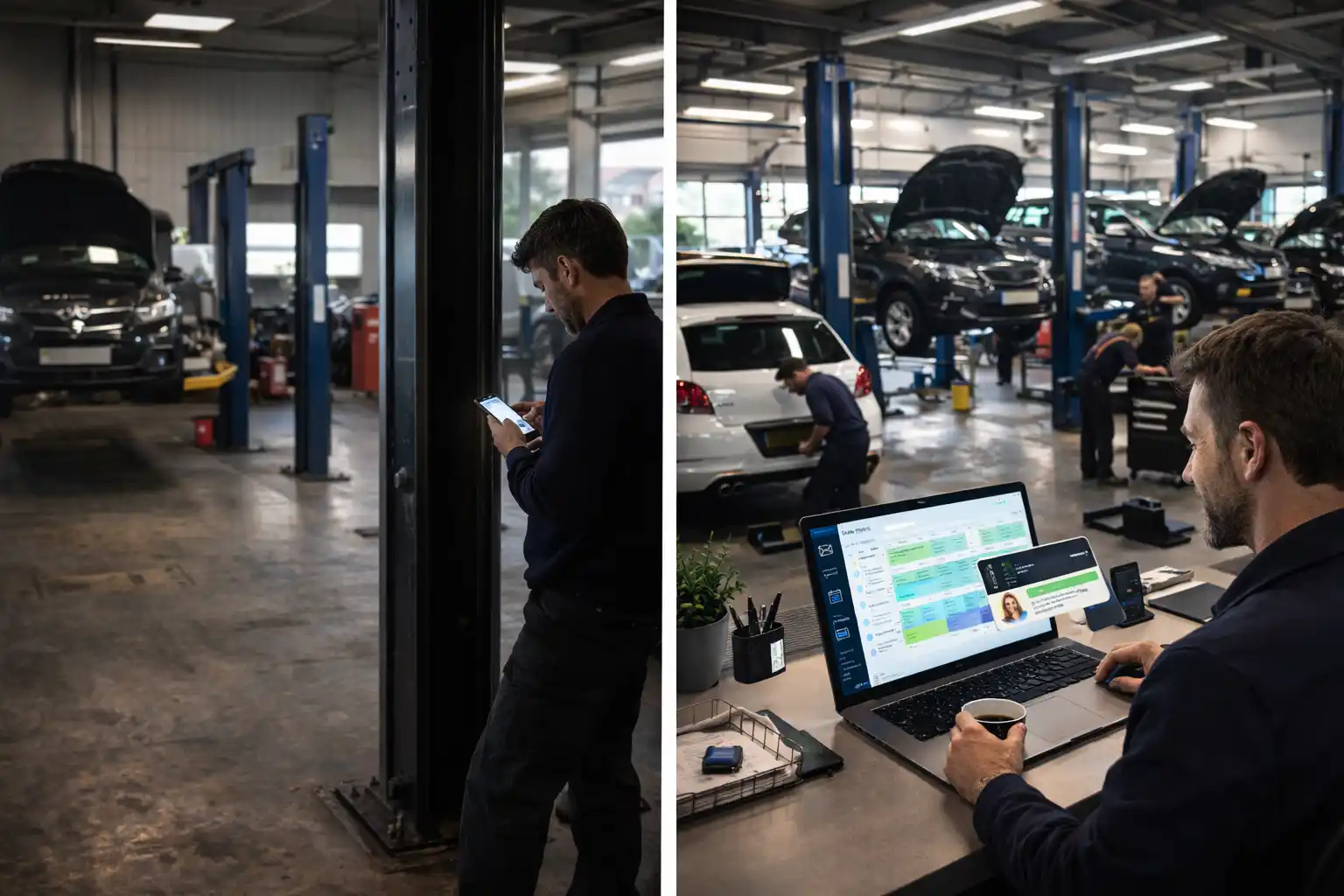
MOT reminders were managed through a spreadsheet. Each month, the receptionist would filter for vehicles due in the coming weeks and manually send text messages — one at a time — from the garage's mobile phone. On a busy month, this took 3–4 hours. On a quiet month, it didn't get done at all.
The Problem
The manual reminder process had five fundamental flaws:
- Inconsistent timing — reminders were sent when someone had time, not when the customer needed them. Some customers got a reminder two weeks before their MOT. Others got nothing.
- Single touchpoint — one text message, sent once. If the customer didn't see it, didn't act on it, or forgot — there was no follow-up.
- No email channel — the spreadsheet had mobile numbers but not all had email addresses captured. SMS-only meant missing customers who preferred email.
- No tracking — there was no way to see which reminders had been sent, which customers had booked, and which had lapsed. The spreadsheet showed due dates but not outcomes.
- Failure-to-repair gap — when a vehicle failed its MOT with advisory items, there was no systematic follow-up to convert those advisories into repair bookings. The failure was recorded on paper and the customer left.
The Automated Reminder Sequence
My Garage CRM replaced the entire manual process with a multi-stage automated sequence. Every vehicle with an MOT due date now receives the following:
First Reminder — Early Nudge
Friendly heads-up that the MOT is approaching. Includes a booking link and the garage phone number. Catches organised customers who like to plan ahead.
SMS + EmailSecond Reminder — Urgency
Stronger message — MOT expiring soon, book now to avoid driving without a valid certificate. Direct booking link with available slots shown.
SMS + EmailFinal Reminder — Last Chance
Final nudge for customers who haven't yet booked. Clear deadline. One-tap booking. Sent by SMS only for maximum visibility.
SMS onlyAdvisory Follow-Up
If the vehicle failed or had advisory items, an automatic follow-up offers a repair booking with the specific items listed. Converts failures into paid work.
SMS + EmailBefore and After
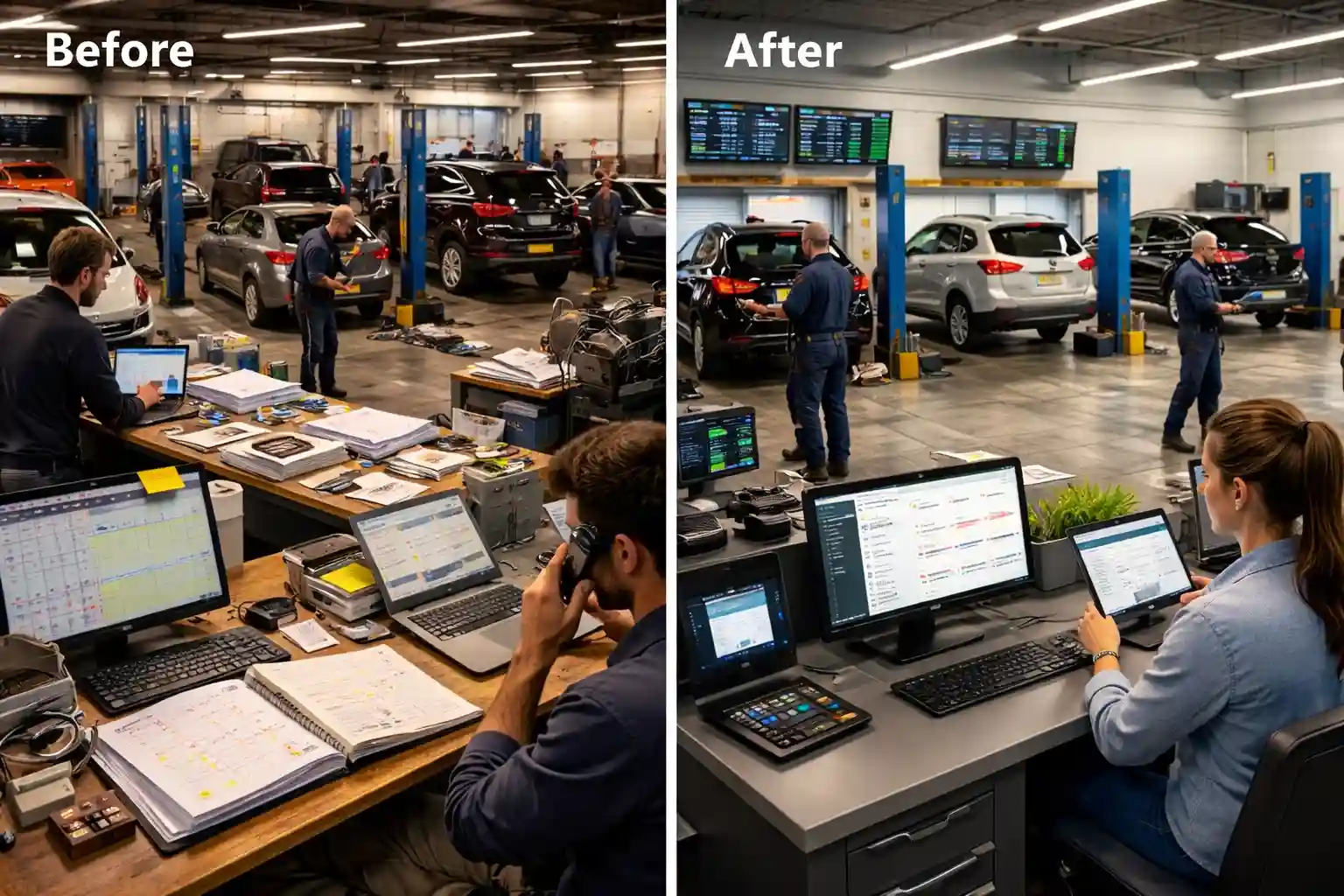
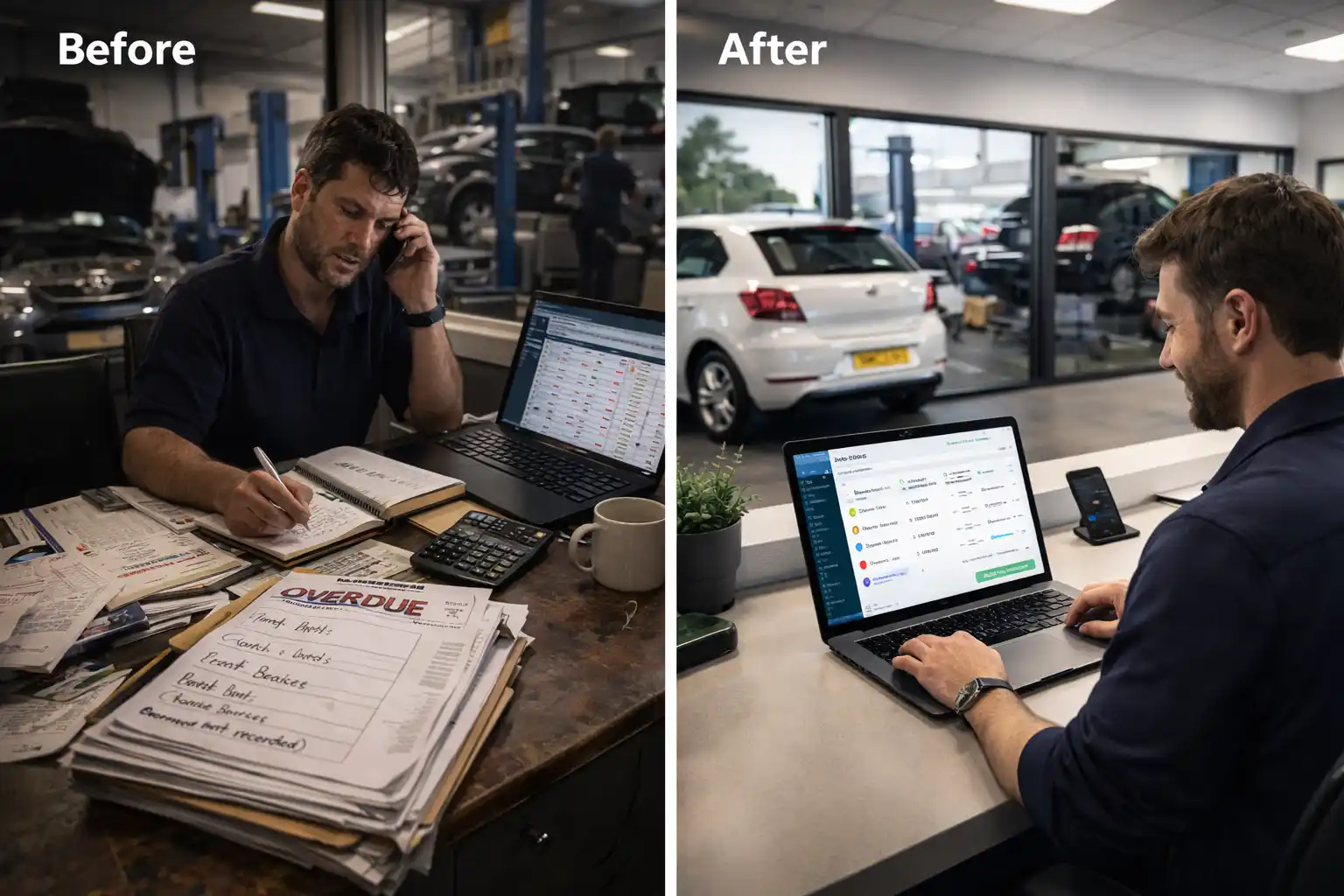
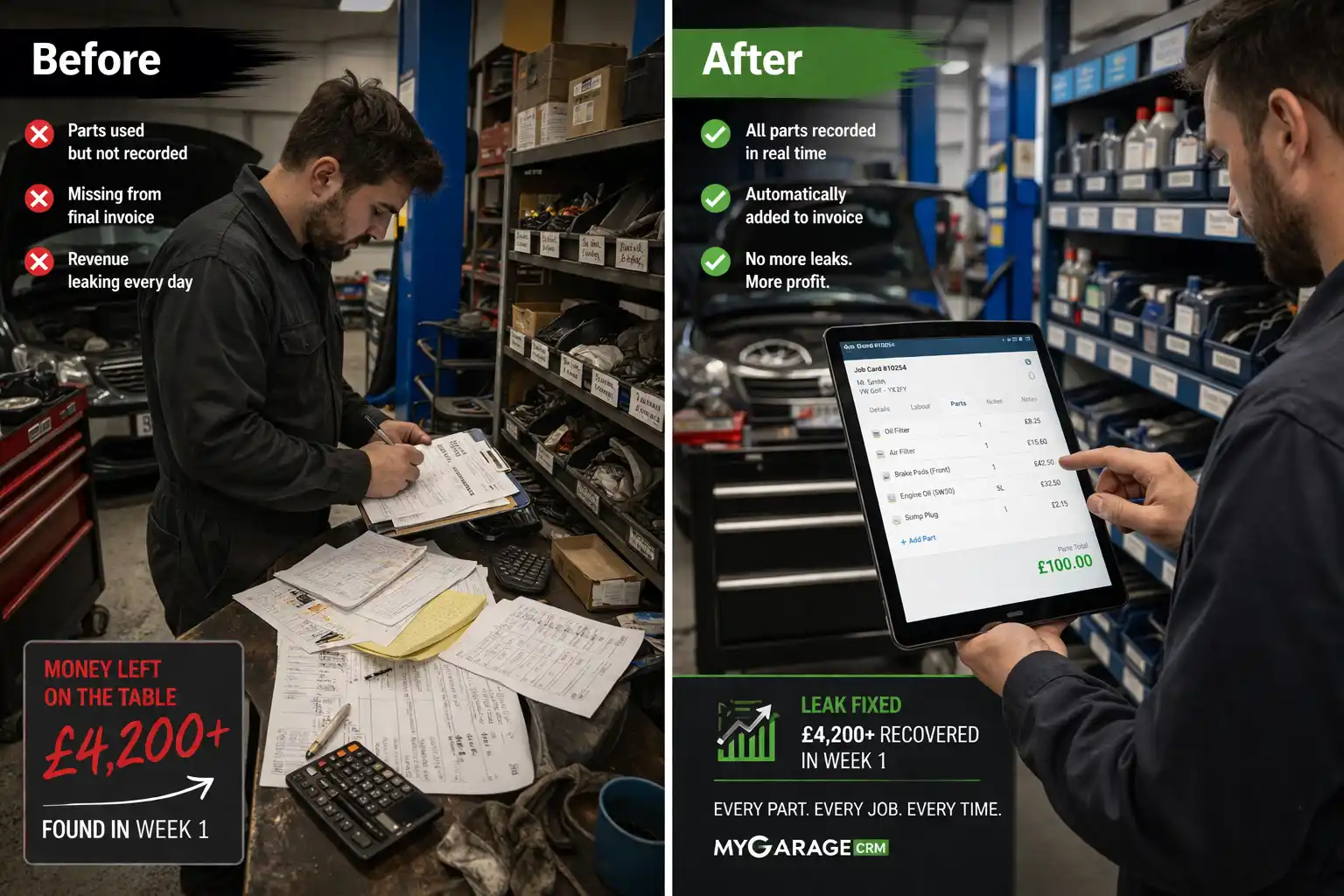
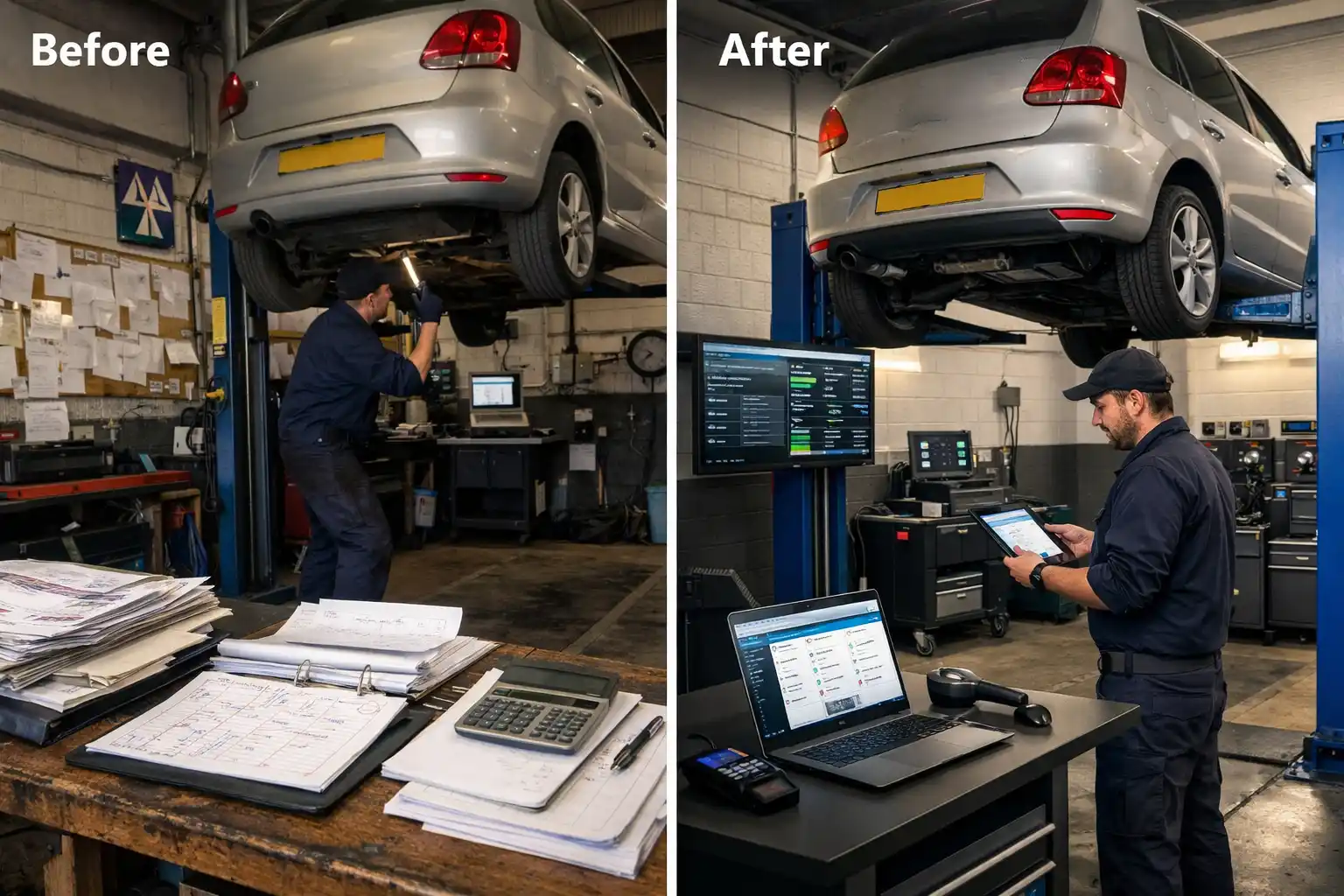
❌ Before
- Spreadsheet with MOT due dates
- Manual text messages sent one at a time
- One reminder — if it got sent at all
- No email reminders
- No failure-to-repair follow-up
- No tracking of reminder outcomes
- 3–4 hours manual work per month
- 34% rebooking rate
✅ After
- MOT dates on every vehicle record automatically
- Automated SMS + email at 6w, 2w, 3d
- Three pre-expiry reminders + advisory follow-up
- Dual channel — SMS and email
- Automatic repair booking offer after failures
- Full reporting — sent, opened, booked, lapsed
- Zero manual effort
- 68% rebooking rate
Month-by-Month Results
Karen tracked the rebooking rate monthly — the percentage of customers due an MOT who actually booked and attended:
| Period | MOTs Due | MOTs Booked | Rebooking Rate |
|---|---|---|---|
| Pre-switch average (6 months) | 118/month | 40/month | 34% |
| Month 1 | 124 | 71 | 57% |
| Month 2 | 109 | 72 | 66% |
| Month 3 | 121 | 82 | 68% |
The rebooking rate climbed from 34% to 68% over three months — exactly doubling. The improvement was steepest in month 1 (the backlog of customers who hadn't received any reminder in months responded immediately) and continued to climb as the consistent multi-stage sequence took effect.
Results After 90 Days
Rebooking rate
Doubled from 34% to 68%. Karen expects this to stabilise around 70–75% as the full reminder cycle reaches customers who were previously completely unreached. The remaining 25–30% represents customers who have moved, changed vehicle, or genuinely switched garage — not people who simply forgot.
Advisory conversion
The automated follow-up after MOT failures generated 28 additional repair bookings in 90 days — work that previously walked out the door because no one chased it. Average advisory repair value was £185, generating approximately £5,180 in additional revenue from a single automated message.
Admin time
The 3–4 hours per month the receptionist spent filtering the spreadsheet and typing individual text messages dropped to zero. The entire reminder process runs without human intervention. The receptionist now spends that time on customer calls and booking management.
Customer feedback
Multiple customers commented that they appreciated the reminders — several mentioned they'd previously let their MOT lapse because they forgot and had been driving illegally without realising. The reminders were received as a genuine service, not marketing.
Key Takeaways
- One reminder isn't enough. A single text message has a limited open rate and an even lower action rate. A three-stage sequence (6 weeks, 2 weeks, 3 days) catches customers at different decision points and dramatically improves conversion.
- Timing matters more than volume. The same message sent at the right time outperforms multiple messages sent at random. Automated scheduling ensures every customer gets the right message at the right moment.
- Advisory follow-up is hidden revenue. MOT failures generate immediate repair opportunities. Without a systematic follow-up, that work goes to the nearest competitor. 28 repair bookings in 90 days — all from one automated message.
- Manual processes fail when you're busy. The irony of manual reminders is that they get skipped precisely when the garage is busiest — which is exactly when future bookings matter most. Automation removes the dependency on available staff time.
- Customers don't leave because they're disloyal — they leave because they forget. A 34% rebooking rate doesn't mean 66% of customers switched to a competitor. It means 66% simply weren't reminded. Fixing the reminder process recovered most of them immediately.