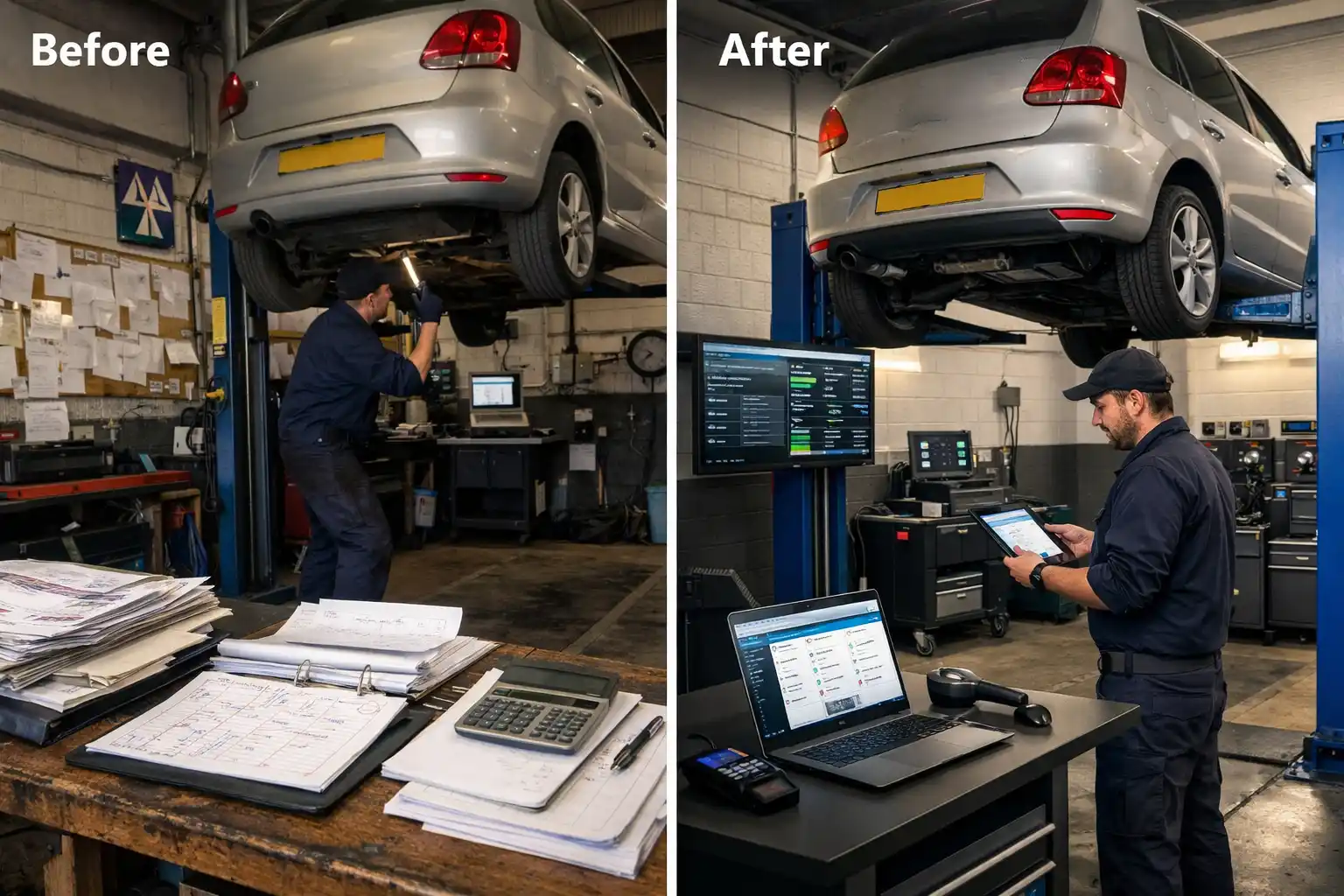

The Situation
Steve runs a 4-bay independent garage in a Surrey commuter town. The catchment area is mostly working professionals — long days in London, short evenings at home, weekends already crammed with kids' fixtures and admin. The garage turns over approximately £480,000 a year across MOTs, servicing, repairs and tyres, employs three technicians and a part-time receptionist, and had a solid 4.6-star Google rating going in.
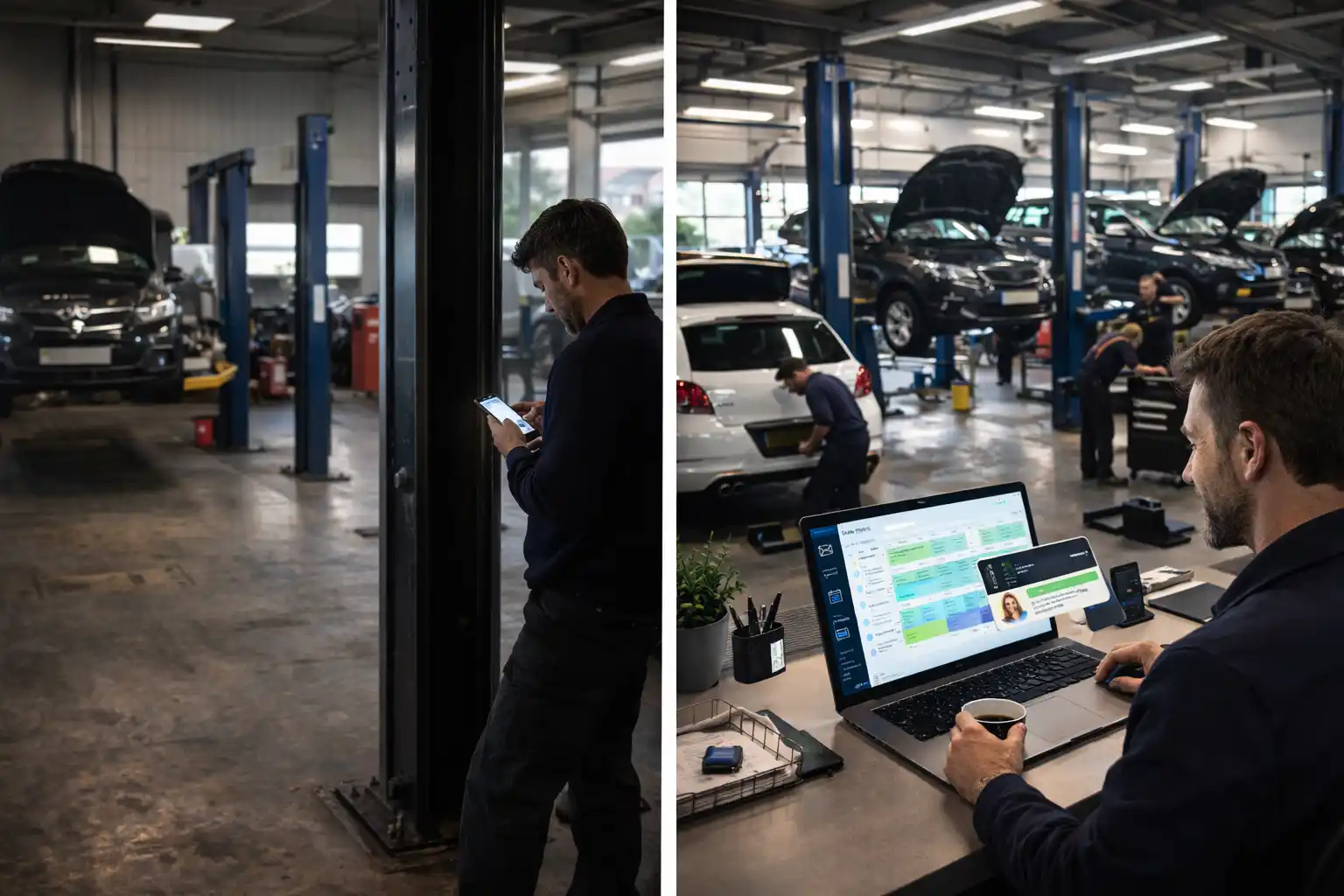
Booking, until April 2026, was phone-only. Reception took calls Monday to Friday between 8am and 5.30pm and Saturday morning until noon. Outside those hours the line went to a basic voicemail. The system had worked for fifteen years. It was starting to leak.
The Problem
The phone-only model was creating a chain of small leaks that compounded into significant lost revenue:
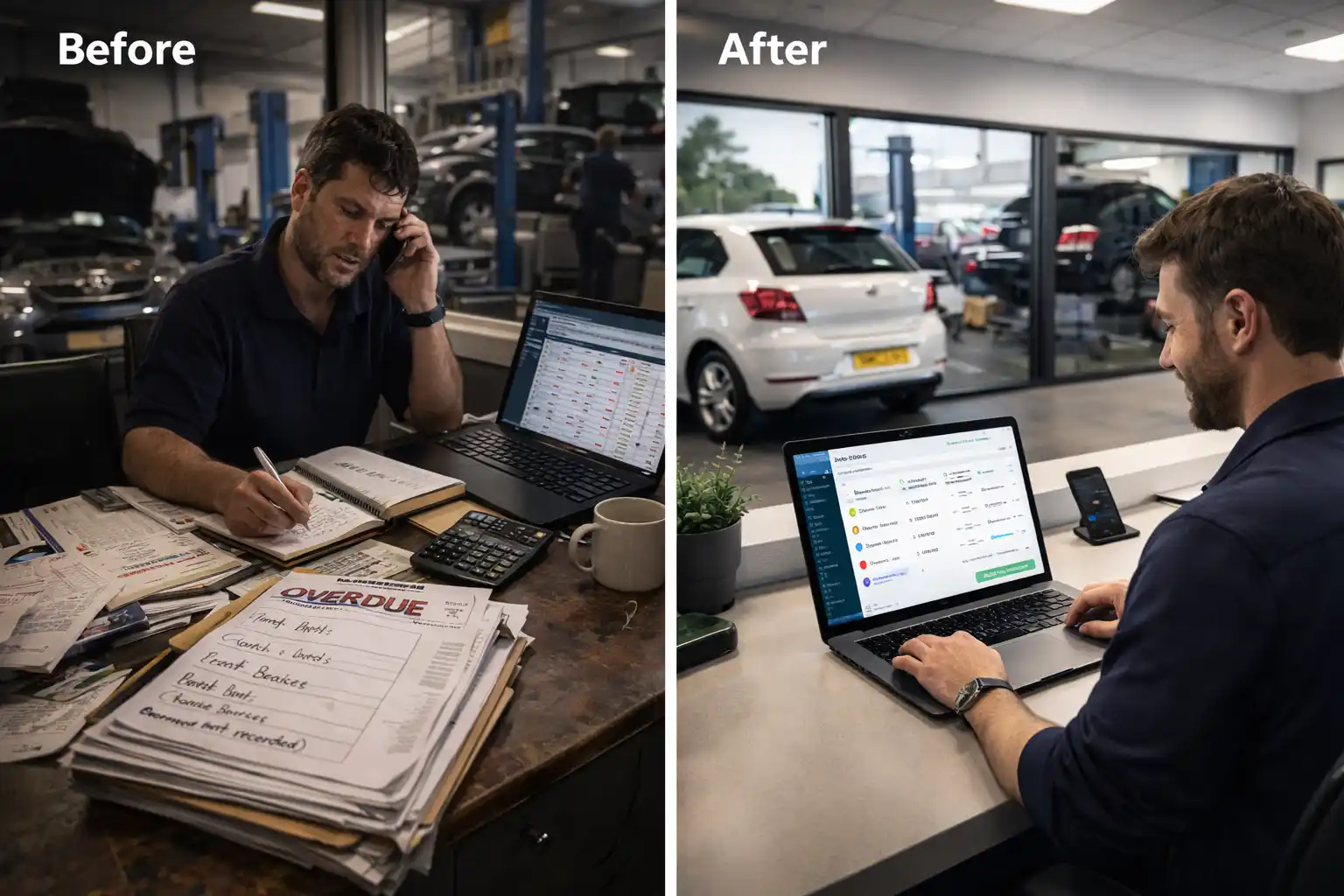
- Voicemail black hole. The voicemail box averaged four to six new messages every Monday morning from the previous Friday evening, Saturday afternoon and Sunday — a typical mix of MOT enquiries, service quote requests and "can I bring it in this week" calls. Roughly half of those callers had already booked elsewhere by the time Steve called back.
- Reception bottleneck. Between 9am and 11am the receptionist was on the phone almost continuously — handing keys, taking new bookings, fielding payment queries. New customers ringing during that window often hit a busy tone and went straight to a competitor's listing.
- Lost younger customer base. The garage's Google Business Profile was getting clicks, but the click-through to phone calls was disproportionately older demographics. Younger customers (25–45) were searching, finding the garage, then bouncing — looking for a "Book online" button that wasn't there.
- Awkward conversations. Reception was quoting service prices over the phone with imperfect information, occasionally undercharging because the customer described the wrong vehicle, and frequently transferring to the workshop to confirm availability — which felt unprofessional even when the answer was yes.
- No data. Steve had no way to know how many people had tried to book and given up. Calls that didn't connect simply weren't recorded — invisible, by definition.
The Setup
Steve's existing My Garage CRM Pro plan already included the diary booking widget — it had been switched off because the team didn't think it was needed. Activating it took the receptionist about forty minutes one quiet Wednesday afternoon. The configuration steps were straightforward:
- Service durations set realistically — MOT 45 minutes, basic service 90 minutes, full service 3 hours, tyre changeover 30 minutes per pair. Diagnostics and repairs left as "request a quote" rather than direct booking.
- Bay capacity configured — three bays available for online bookings, one bay reserved for walk-ins and overrun work.
- £20 deposit required for MOTs — applied automatically through Stripe, fully refundable if cancelled with 24 hours' notice.
- Booking widget added to homepage and every service page — single line of HTML, prominent "Book online" button above the fold.
- Google Business Profile booking link — direct booking button added to the garage's Google listing through the GBP dashboard.
The first online booking arrived at 9.47pm that same evening — an MOT for a Volkswagen Golf, customer paid the £20 deposit, slot confirmed for the following Tuesday. Total team involvement: zero.
What the Data Revealed: Hour-by-Hour Booking Demand
Within two weeks the booking data revealed the pattern that customers had been quietly trying to tell the garage about for years. Demand was concentrated in two windows the phone was never going to capture properly: lunchtime and evenings.
The 7pm and 9pm bars tell the entire story. Before online booking went live, those columns were empty — not because no one wanted to book at those times, but because there was no way for them to. After 60 days, those evening hours were comfortably the highest-demand windows of the entire week, with 9pm Tuesday consistently the single biggest booking hour.
Where the New Bookings Came From
Of the additional bookings captured in the first 60 days, the source breakdown was telling — and somewhat counterintuitive. The Google Business Profile booking button outperformed the website widget by a large margin, simply because customers searching for "MOT near me" never visited the website at all.
New booking sources — first 60 days
42% of new bookings arrived outside business hours (evenings + weekends combined). The Google Business Profile button alone captured more bookings than the website widget during business hours did — a strong argument that the highest-impact change for any phone-only garage is adding the booking link to Google first, before anything else.
Weekly Booking Volume — Before and After
The headline 38% lift in MOT bookings was made up of three components: bookings that previously would have gone to a competitor, bookings that previously would have been lost entirely, and a small share of bookings the garage would have captured on the phone anyway.
| Metric | Before (avg/week) | After (avg/week) | Change |
|---|---|---|---|
| MOT bookings | 52 | 72 | +38% |
| Service bookings | 28 | 34 | +21% |
| Tyre changeovers | 11 | 17 | +55% |
| Voicemails to call back | 14 | 5 | −64% |
| No-show rate | 9% | 3% | −67% |
| Total weekly booking value | £8,400 | £11,070 | +£2,670 |
The £20 deposit on MOT bookings dropped no-shows from 9% to 3% — a finding that surprised Steve more than any of the volume numbers. The no-show reduction alone freed roughly six bay-hours per week that had previously been wasted holding empty slots for customers who never arrived.
Customer Feedback Themes
The garage's Google rating climbed from 4.6 to 4.8 stars over the 60-day window, with new reviews showing a consistent set of positive themes that hadn't featured before:
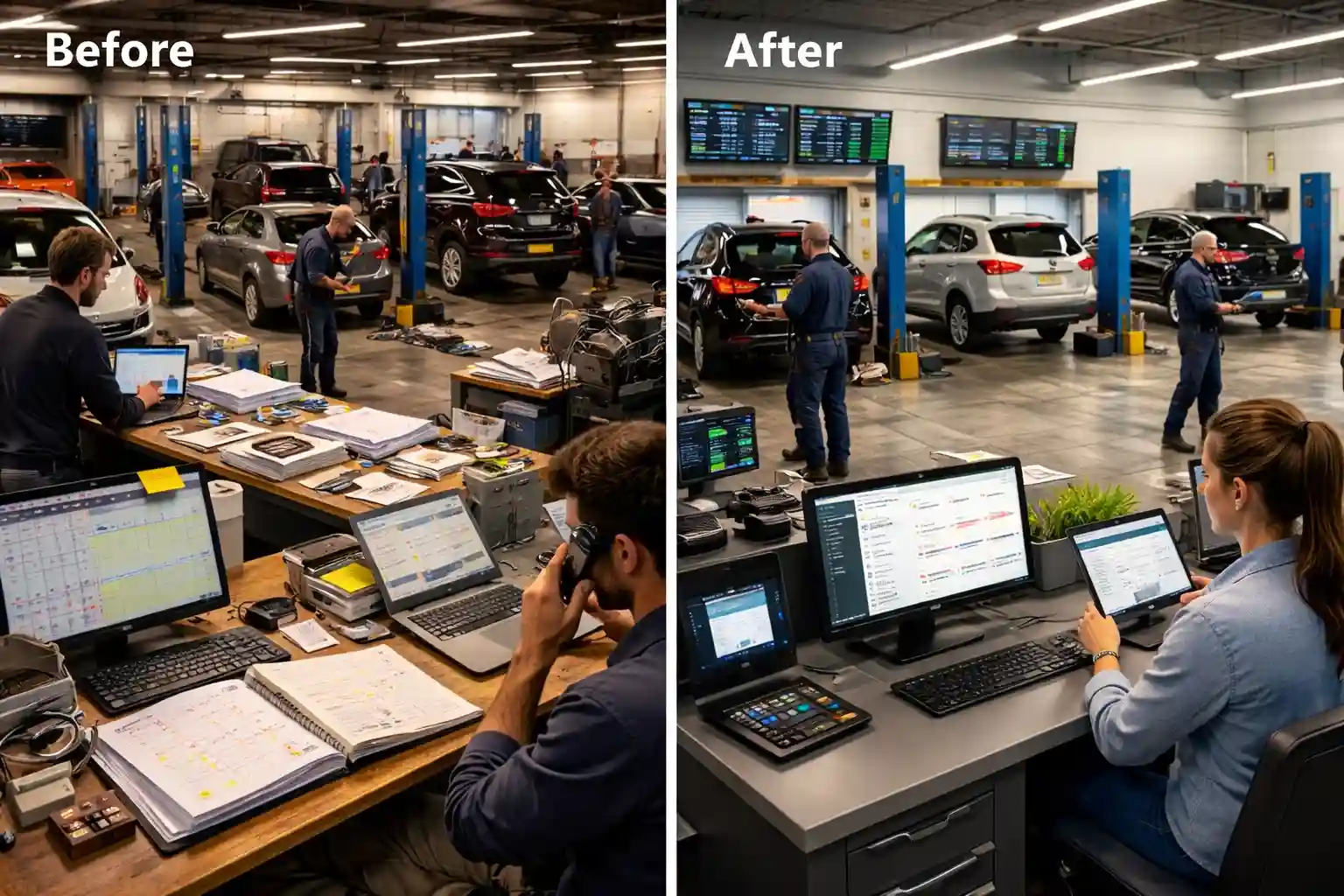
Before and After
❌ Before
- Phone-only — Mon–Fri 8–5.30, Sat 8–12
- 4–6 voicemails every Monday morning
- Reception bottleneck 9–11am every weekday
- Younger customers bouncing off Google listing
- Quotes given verbally with patchy info
- 9% no-show rate on MOTs
- No data on missed booking attempts
- 4.6-star Google rating, slowly drifting
✅ After
- 24/7 booking via website + Google Business Profile
- 5 voicemails average (down 64%)
- Reception freed for in-person customers
- 42% of new bookings arrive outside 9–5
- Customer enters own reg — DVLA pre-fills details
- 3% no-show rate (£20 deposit)
- Full booking funnel data available
- 4.8-star Google rating, climbing
Results After 60 Days
Booking volume
Across all booking categories (MOTs, services, tyres) the garage added roughly 30 extra bookings per week — a 36% blended uplift. Of those, 42% landed outside business hours and would not have been captured at all under the previous phone-only model. The peak booking hour shifted from 10am Monday (under phone only) to 9pm Tuesday (under online + phone) — a complete inversion.
Revenue impact
Total weekly booking value rose from approximately £8,400 to £11,070. Across the 60-day window that translated to £21,400 of additional captured revenue, with an annualised run rate of approximately £138,800. The Pro plan at £79.99 per month was recovered in revenue terms within the first 36 hours of the booking widget going live.
Reception efficiency
With Monday-morning voicemail volume cut by roughly two-thirds, the receptionist's first hour each week was reclaimed for in-person customer handling rather than callback-chasing. The 9–11am phone bottleneck eased noticeably — busy-tone complaints from new customers stopped almost entirely after week three.
No-show rate
The £20 MOT deposit dropped no-shows from 9% to 3%. For a garage running approximately 70 MOTs per week, that's roughly four reclaimed bay-hours per week previously lost to empty slots — slots that can now be filled either with replacement bookings or with planned diagnostic work.
Google rating
The Google rating moved from 4.6 to 4.8 stars over the 60-day window, with the recurring theme in new reviews being convenience and predictability of booking. Higher ratings on Google Business Profile have a downstream effect on local search ranking, which in turn drives more visibility — a compounding effect that started showing up in click-through data toward the end of the trial period.
Key Takeaways
- Phone-only booking actively bleeds customers in 2026. Not "could potentially" — does. The 7pm and 9pm bars in this case study were empty before and busiest after, with no other variable changing. Those customers were always there; the garage just had no way to receive them.
- Google Business Profile is the highest-impact placement. 38% of all new bookings came through the GBP button — more than the website widget contributed during business hours. If a phone-only garage does only one thing, it should be adding the booking link to Google.
- Deposits cut no-shows hard. A £20 MOT deposit reduced no-shows by 67% — and conversion remained high because the deposit is fully refundable for genuine cancellations. The fear of "deposits will scare customers off" is mostly a fear, not a reality.
- Reception time freed is reception time gained. Online booking didn't replace the receptionist — it freed them for the conversations that actually need a person, like genuine repair enquiries and walk-in customer handling. Reception became more useful, not less.
- Compounding ratings effect. Booking ease drove higher ratings, which drove higher local search ranking, which drove more booking volume. By week 8 the garage was visibly higher in "MOT near me" results than it had been in week 1.
For more on the booking behaviour patterns behind this case study, see our companion guide: Online Booking for Garages: Why Customers Are Booking Your Competitor at 9pm.