
The Situation
Mark runs a used car dealership in Kent with a small forecourt holding 25–35 vehicles and a 2-bay workshop behind it. The business model is straightforward: buy, prep, sell, then service. He sells approximately 15 cars per month and the workshop handles both pre-sale preparation and aftersales servicing for existing customers plus walk-in repairs.
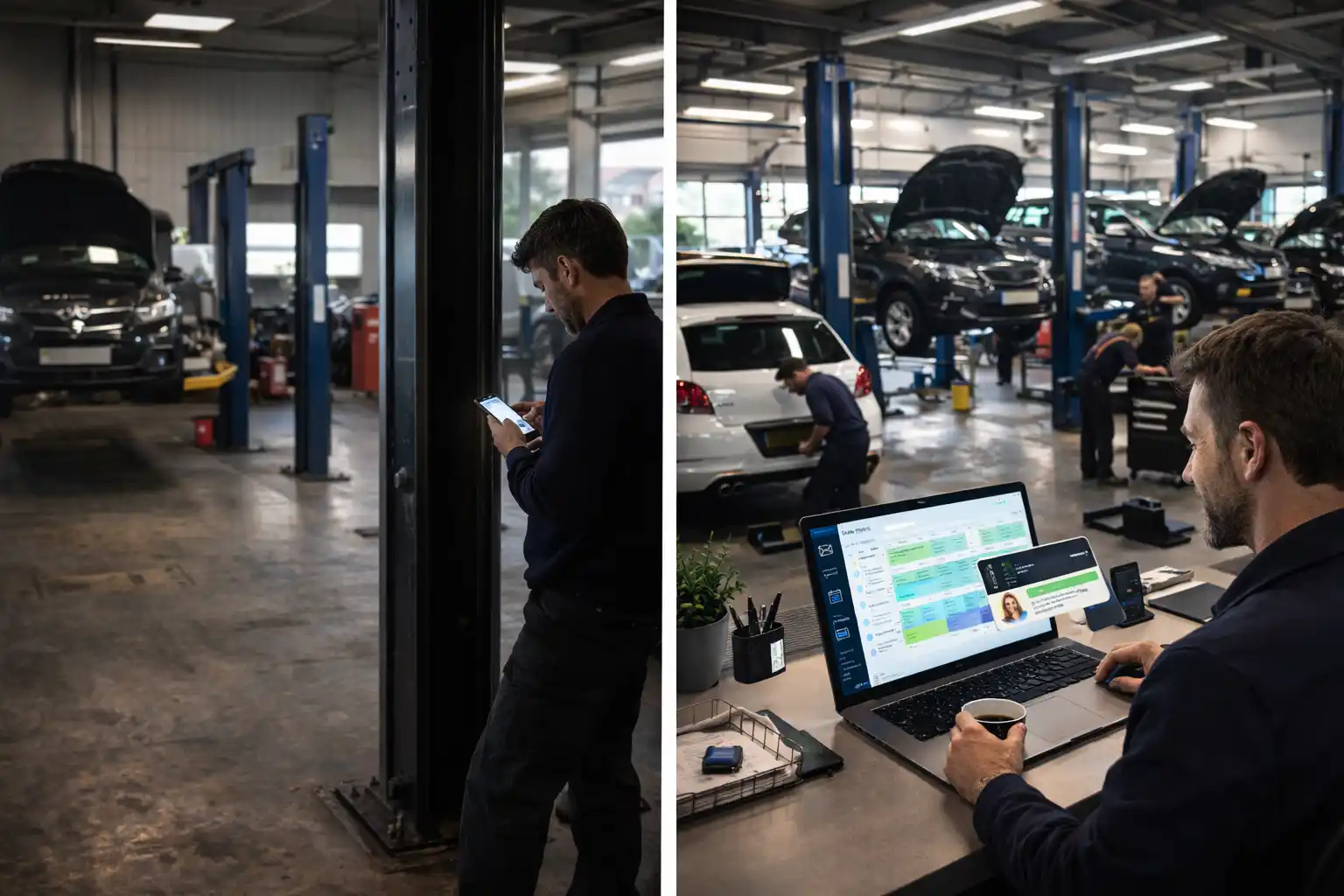
The sales side ran on a dedicated car sales platform that tracked stock, leads and finance deals. The workshop ran on a separate invoicing tool with no connection to the sales system. When a customer bought a car, their record existed in the sales platform — but the workshop had never heard of them.
The Problem
The disconnect between sales and servicing created a pattern that was costing Mark thousands in lifetime customer value:
- No automatic handover from sales to workshop — customers who bought a car were never added to the workshop system unless someone remembered to do it manually. The majority fell through the gap.
- No aftersales reminders — customers who purchased a vehicle received no service reminders, no MOT notifications, nothing. They defaulted to their nearest local garage for ongoing work.
- Prep jobs untracked — pre-sale vehicle preparation (valeting, servicing, MOT, minor repairs) was done informally with no job card, no parts tracking and no cost visibility. Mark couldn't tell how much prep was costing per vehicle.
- PDI inspections on paper — pre-delivery inspections were done on a printed checklist that was signed and filed. No digital record, no link to the vehicle or customer.
- No single customer view — if a customer who bought a car later brought it in for a repair, the sales history and workshop history were in two different systems with no connection.
The Connected Journey
After switching to My Garage CRM, the entire customer lifecycle — from vehicle purchase through to ongoing servicing — runs through one system. Here's what that looks like:
Vehicle Acquired
Car arrives on the forecourt. Added to the Car Sales CRM module with purchase price, condition notes and target margin. Prep job card created automatically.
Workshop Prep
Technician opens the prep job card — service items, MOT, valet and cosmetic work all logged. Parts tracked against the vehicle. Total prep cost calculated and visible against the target selling price.
PDI Inspection
Digital pre-delivery inspection completed on a tablet. Results linked to the vehicle record. Signed off digitally — no paper checklist, no lost forms.
Vehicle Sold
Customer buys the car. Their record is already in the CRM — name, contact details, vehicle, purchase date. No re-entry required. The customer automatically becomes a workshop customer.
Aftersales Automated
Service reminders fire at 6 months and 11 months. MOT reminders fire at 6 weeks and 2 weeks before expiry. Review request sent 7 days after purchase. The customer never falls off the radar.
Lifetime Servicing
Customer returns for first service. Full purchase history, PDI record and vehicle details already in the system. Technician sees everything — no questions, no re-registration, no lost context.
Before and After
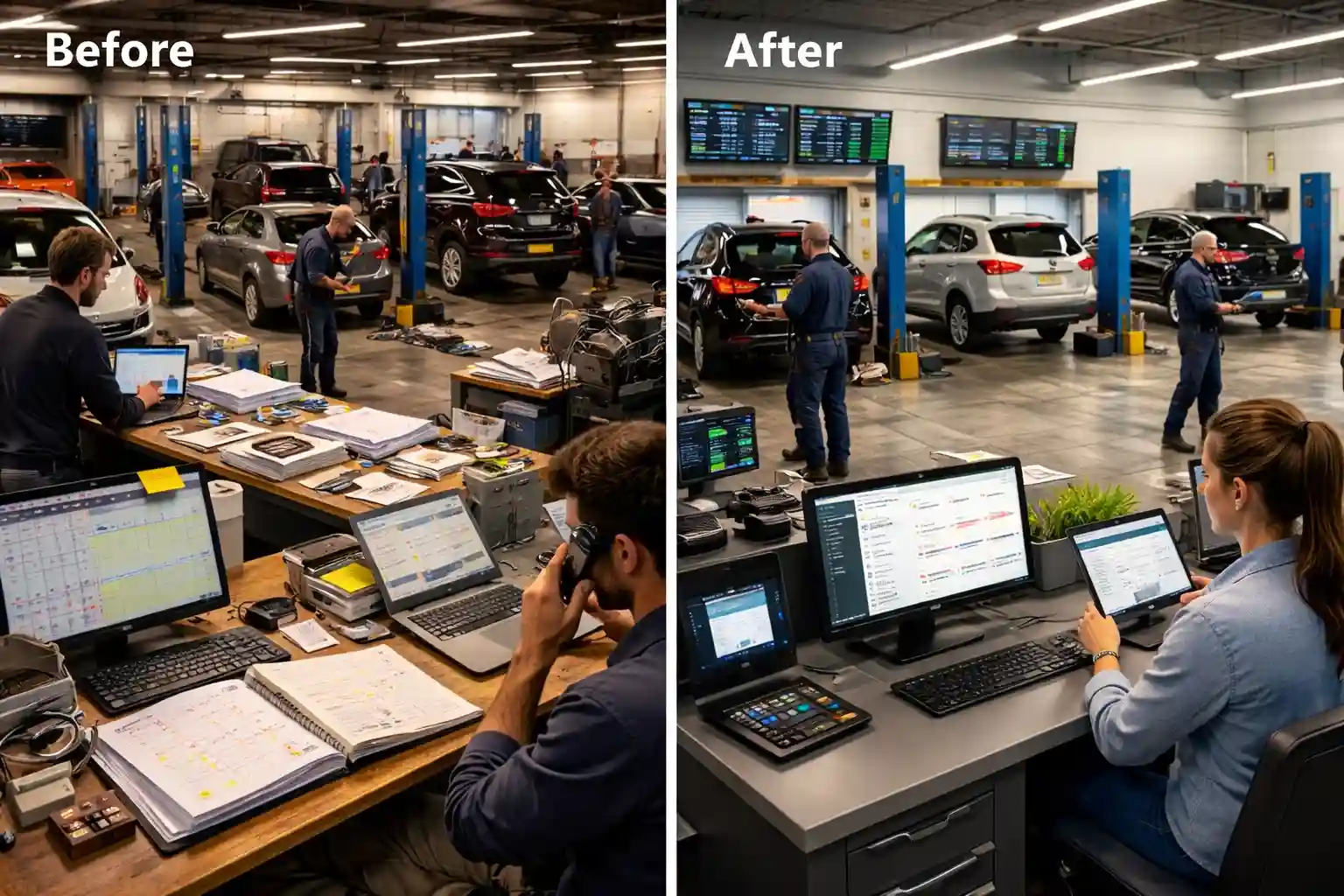
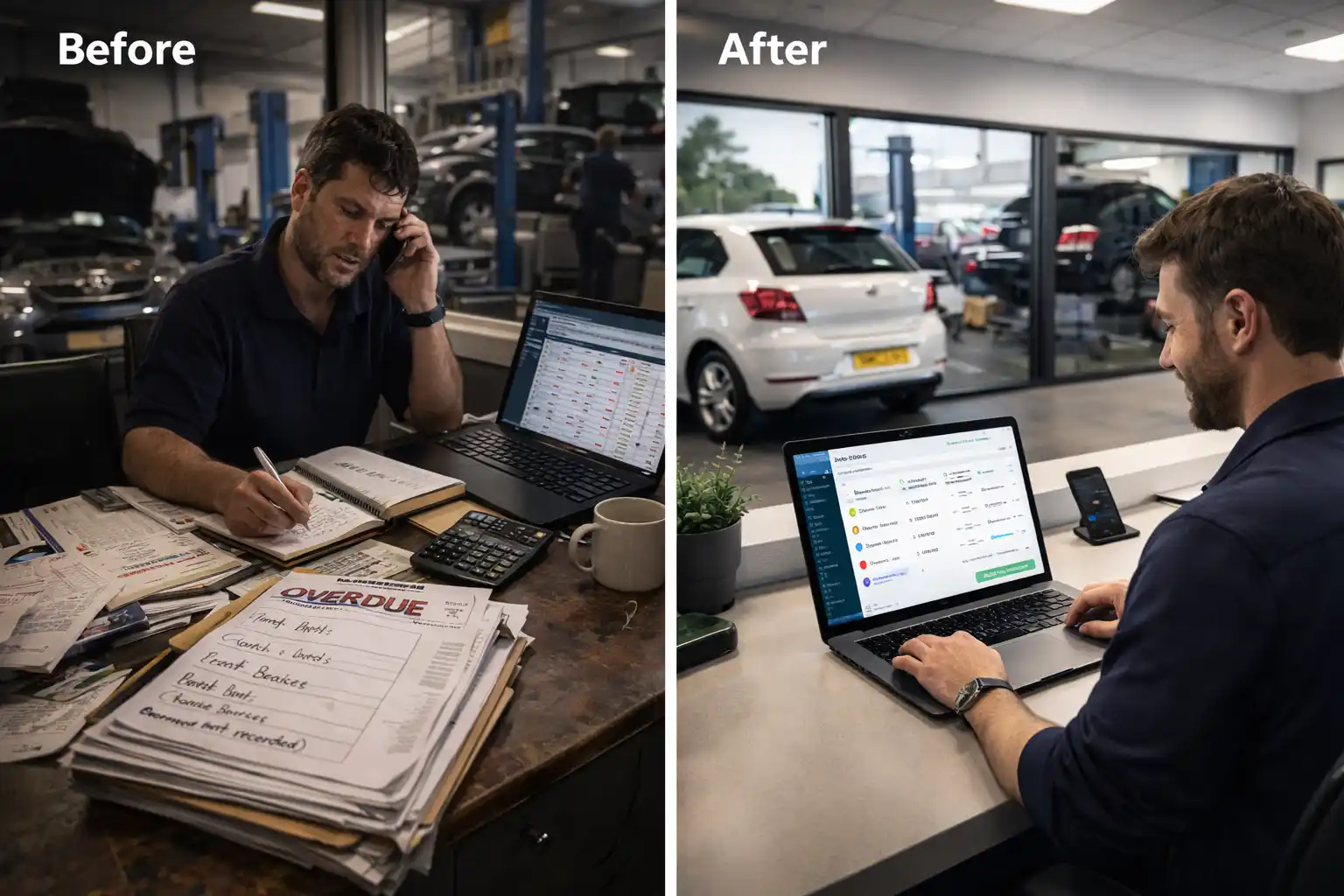
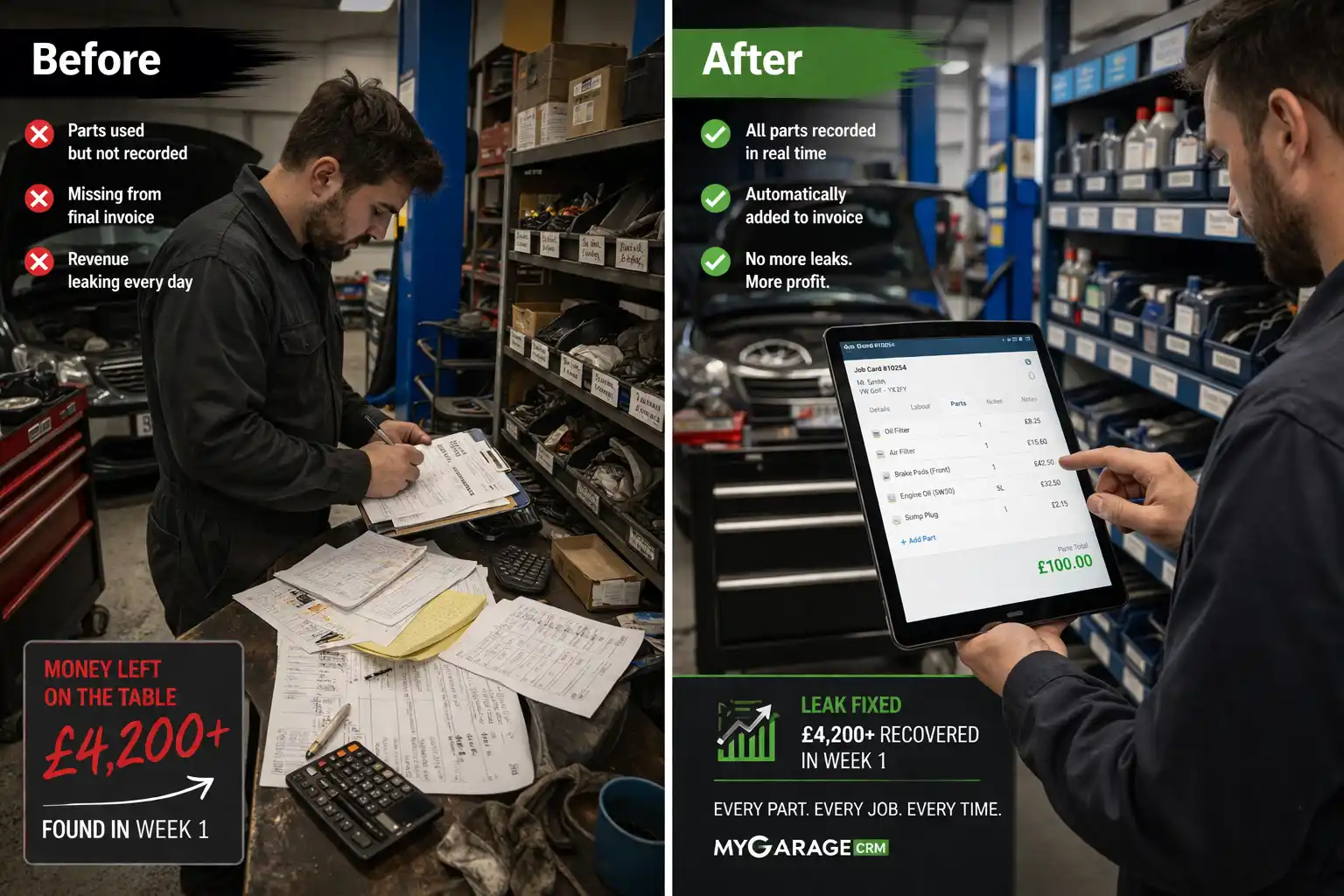
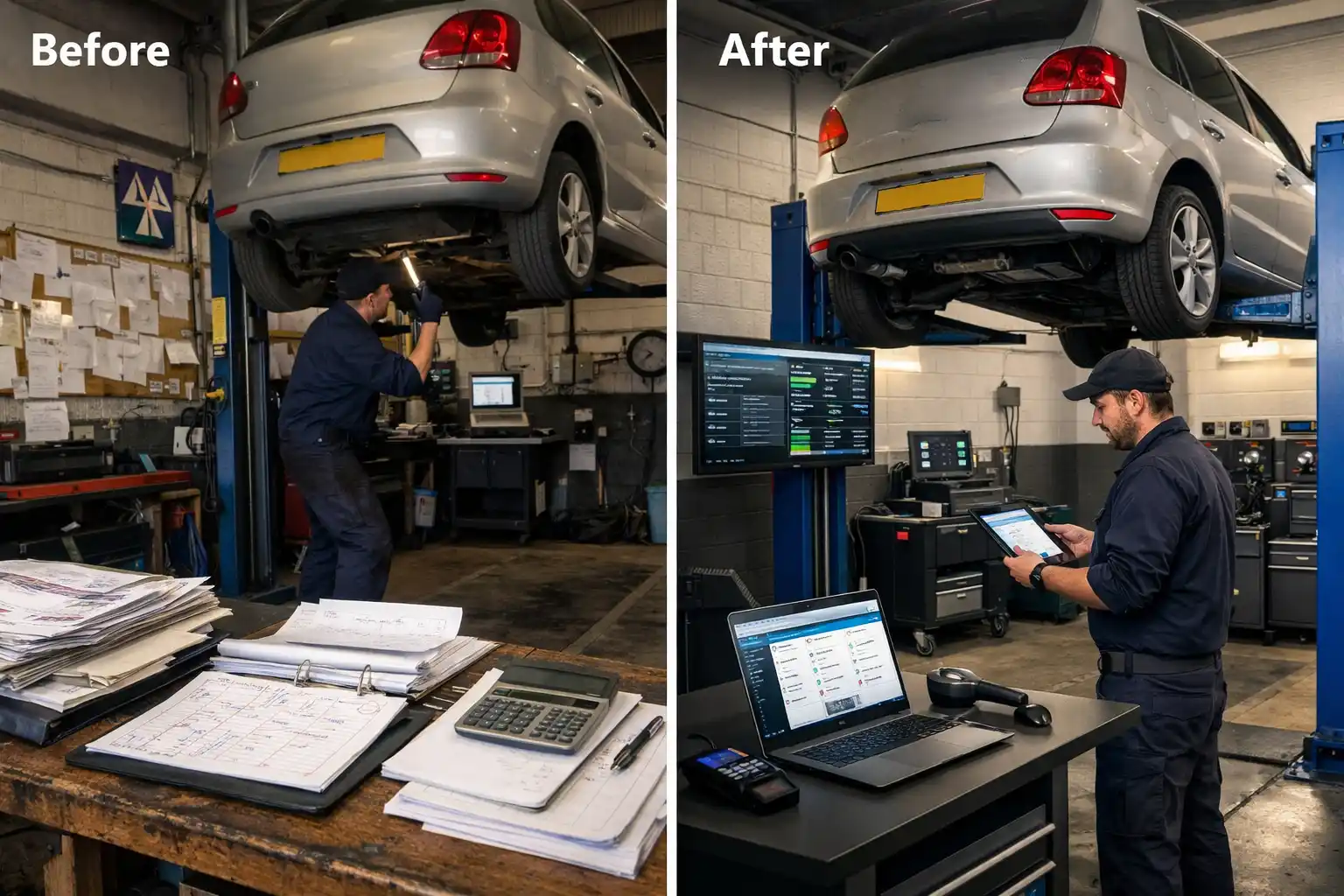
❌ Before
- Sales platform and workshop tool disconnected
- Customers manually re-entered after purchase
- No aftersales reminders sent
- Prep costs invisible — no job cards for prep work
- Paper PDI checklists filed and forgotten
- No single view of sales + service history
- Aftersales retention under 20%
✅ After
- Sales and workshop in one system
- Buyer automatically becomes workshop customer
- Automated service + MOT reminders from day one
- Every prep job tracked with parts and labour costs
- Digital PDI linked to vehicle and customer record
- Complete customer history — purchase through service
- Aftersales retention up to 55% and climbing
Results After 90 Days
Aftersales retention
Previously, fewer than 20% of customers who bought a car returned for servicing. With automated reminders now reaching every buyer, aftersales retention climbed to 55% in the first 90 days — a 35 percentage point improvement. Mark expects this to continue rising as more customers complete their first service cycle.
Aftersales revenue
The 35% retention improvement translated to approximately £8,400 in workshop revenue over 90 days from customers who would not have returned under the old system. This is recurring revenue — every car sold now feeds the workshop diary for years.
Prep cost visibility
For the first time, Mark can see the exact prep cost per vehicle — parts, labour and subcontracted work (valeting, smart repairs) all logged against the vehicle record. In the first month, he identified two models where prep costs consistently exceeded the margin, leading to a pricing adjustment on those vehicles.
Operational efficiency
The admin step of manually re-entering customers from the sales platform into the workshop system — which took approximately 15 minutes per sale and was frequently skipped — has been eliminated entirely. Over 15 sales per month, that's nearly 4 hours of admin removed and zero customers lost in the handover.
Key Takeaways
- The sale isn't the end — it's the beginning of the revenue cycle. Every vehicle sold should generate years of workshop revenue. Without automated aftersales follow-up, that revenue goes to the nearest competitor.
- The handover from sales to workshop must be automatic. Manual re-entry fails because it relies on someone remembering. An automatic link means zero customers lost in the gap.
- Prep cost visibility changes buying decisions. Knowing the true cost to prepare a vehicle for sale — not just the purchase price — directly improves margin accuracy and stock selection.
- Digital PDIs save time and protect the business. A signed digital inspection linked to the customer and vehicle record is faster to complete and far easier to retrieve than a paper form in a filing cabinet.
- The Car Sales CRM module connects naturally to the workshop. Dealers with on-site workshops get the most value from My Garage CRM because the two sides of the business — sales and servicing — finally talk to each other.