The Situation
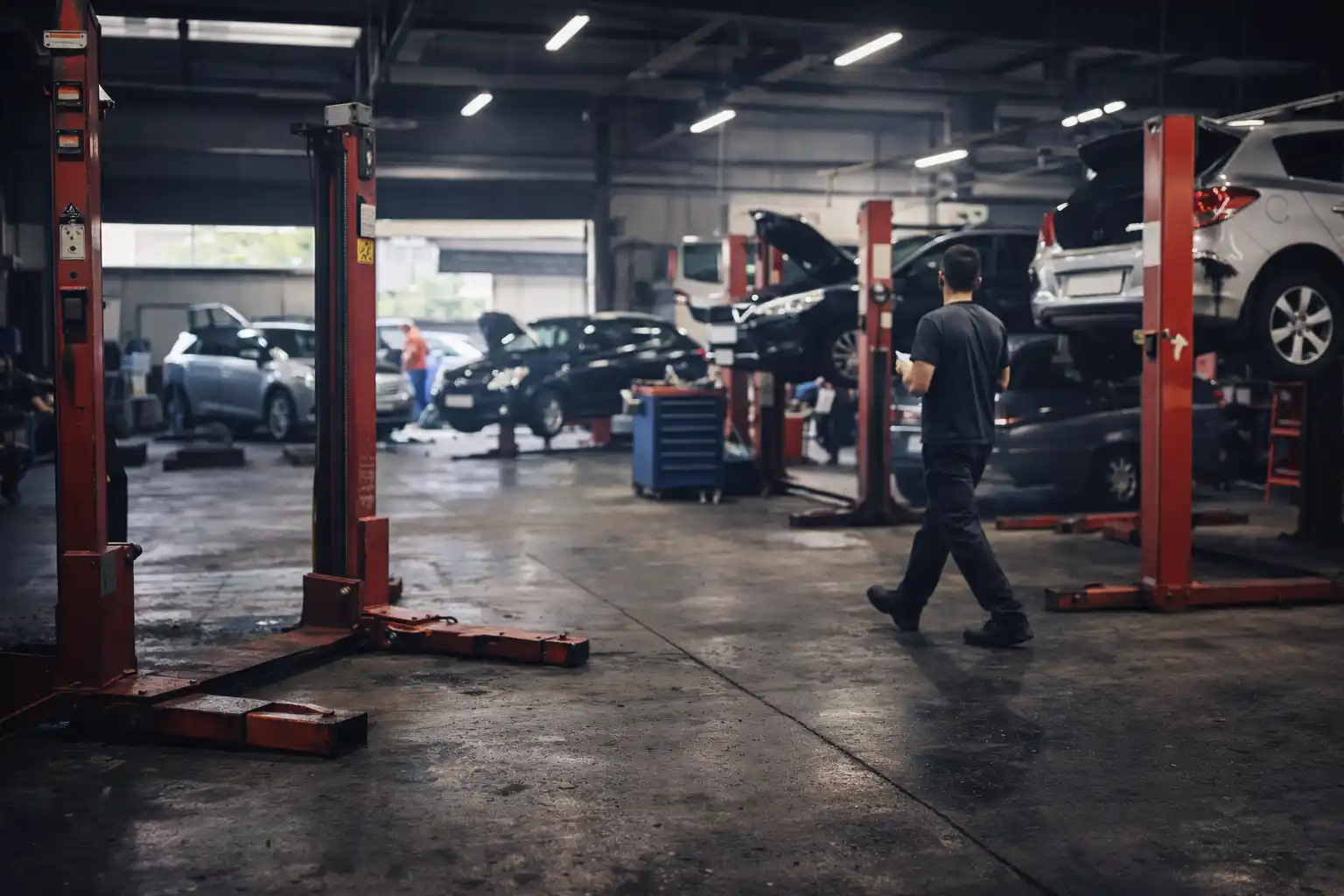
Dave runs a 3-bay independent garage on an industrial estate in the West Midlands. The business turns over approximately £320,000 a year across general servicing, repairs, MOTs and diagnostics. He employs three technicians and a part-time receptionist.
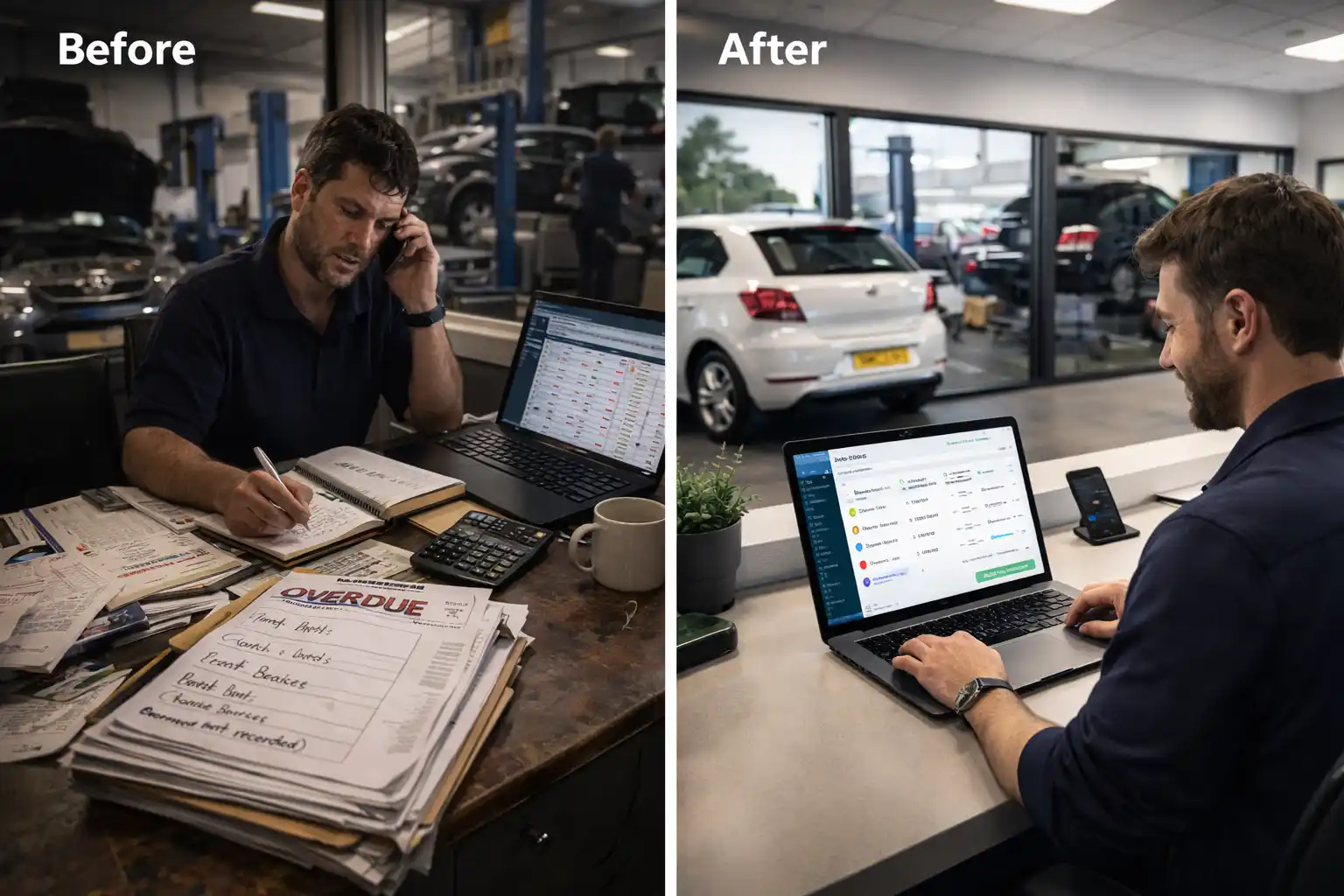
When we first spoke to Dave, his workshop was running on three separate systems: a paper diary for bookings, a standalone invoicing tool for billing, and a spreadsheet for MOT reminder dates. Each system worked independently — nothing connected to anything else.
The Problem
The disconnect between Dave's three systems created a chain of revenue leaks that compounded every week:
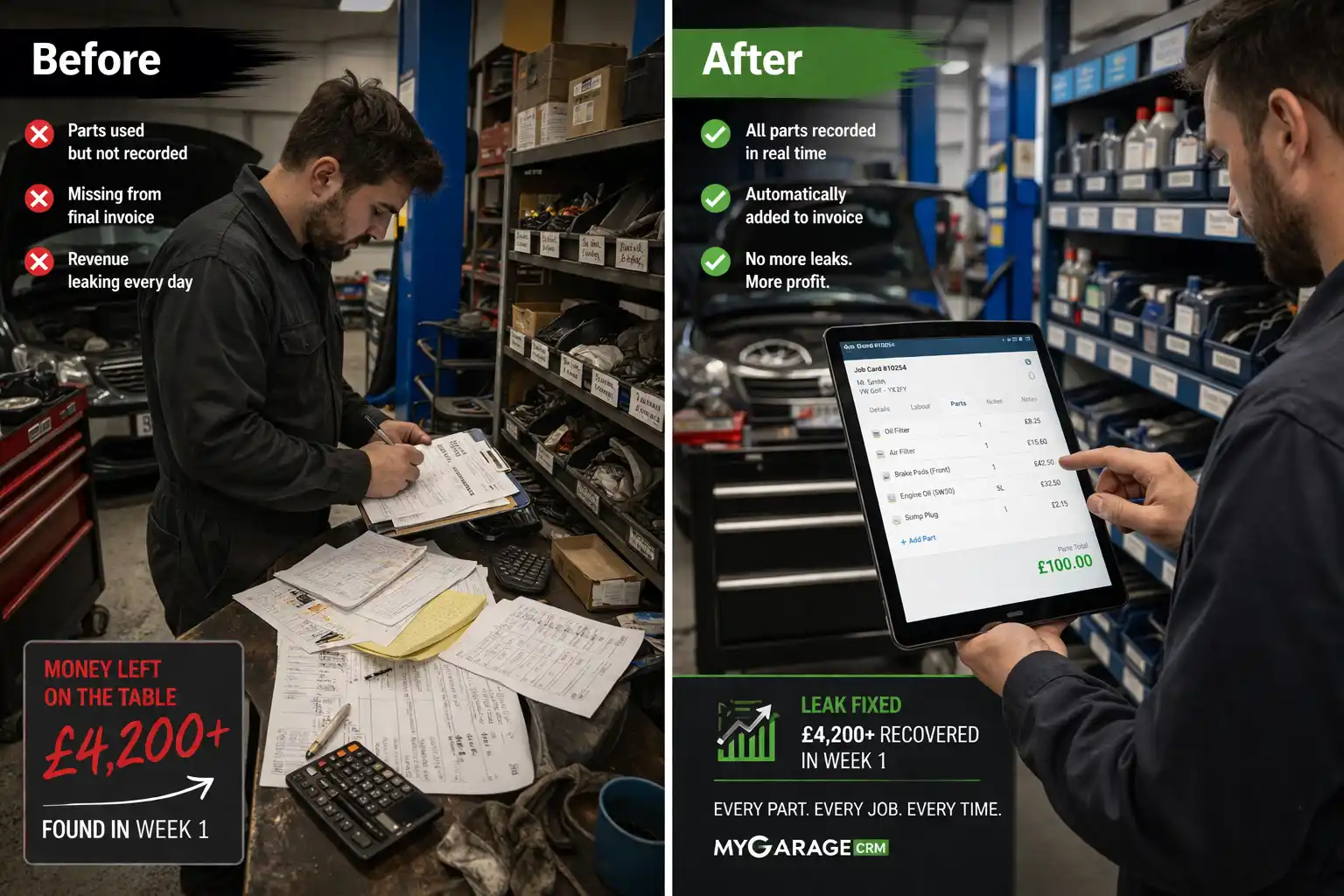
- Parts used but never invoiced — technicians pulled parts from the shelf and fitted them, but the parts never made it onto the job card or the invoice. With no link between stock and billing, the gap was invisible.
- Labour undercharged — jobs regularly took longer than quoted, but the original estimate went out as the final invoice without adjustment. No time tracking meant no visibility.
- MOT reminders sent late or missed — the spreadsheet was updated sporadically. Customers were lapsing to competitors because reminders arrived after their MOT had already expired.
- Overdue invoices not chased — outstanding payments were tracked manually. Follow-up happened when someone remembered — which was rarely.
- No visibility of profitability per job — Dave couldn't tell which job types made money and which lost it. Pricing decisions were based on gut feel.
The Migration
Dave started his free trial and migrated over a weekend. Customer records were imported from the invoicing tool's export, MOT dates came from the spreadsheet, and the paper diary was replaced on Monday morning.
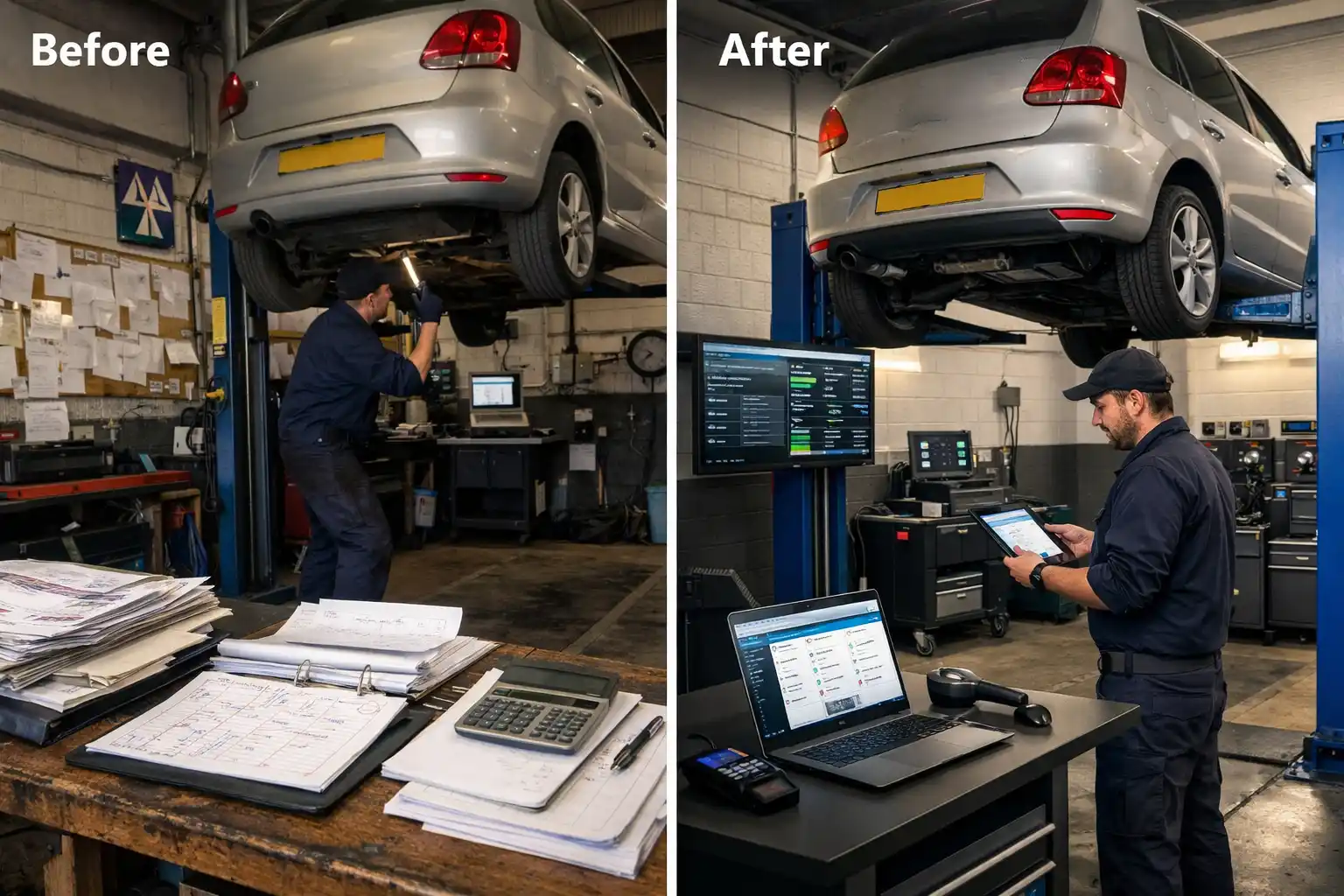
The receptionist was trained on the booking and invoicing workflow in under two hours. Technicians began using digital job cards by Tuesday. By the end of the first week, all three bays were running entirely through My Garage CRM.
What the Data Revealed
The connected workflow — where parts added to a job card automatically appear on the invoice — exposed the revenue leak immediately.
Parts revenue leak: week 1 findings
In the first full week on My Garage CRM, Dave compared parts purchased against parts invoiced. The gap was stark:
| Category | Before (weekly avg) | After (week 1) |
|---|---|---|
| Parts purchased | £1,840 | £1,810 |
| Parts invoiced | £1,620 | £1,790 |
| Gap (lost revenue) | £220/week | £20/week |
The £200/week improvement — roughly £800/month — came entirely from parts that were already being used but never billed. No additional work, no additional cost. Pure recovered revenue.
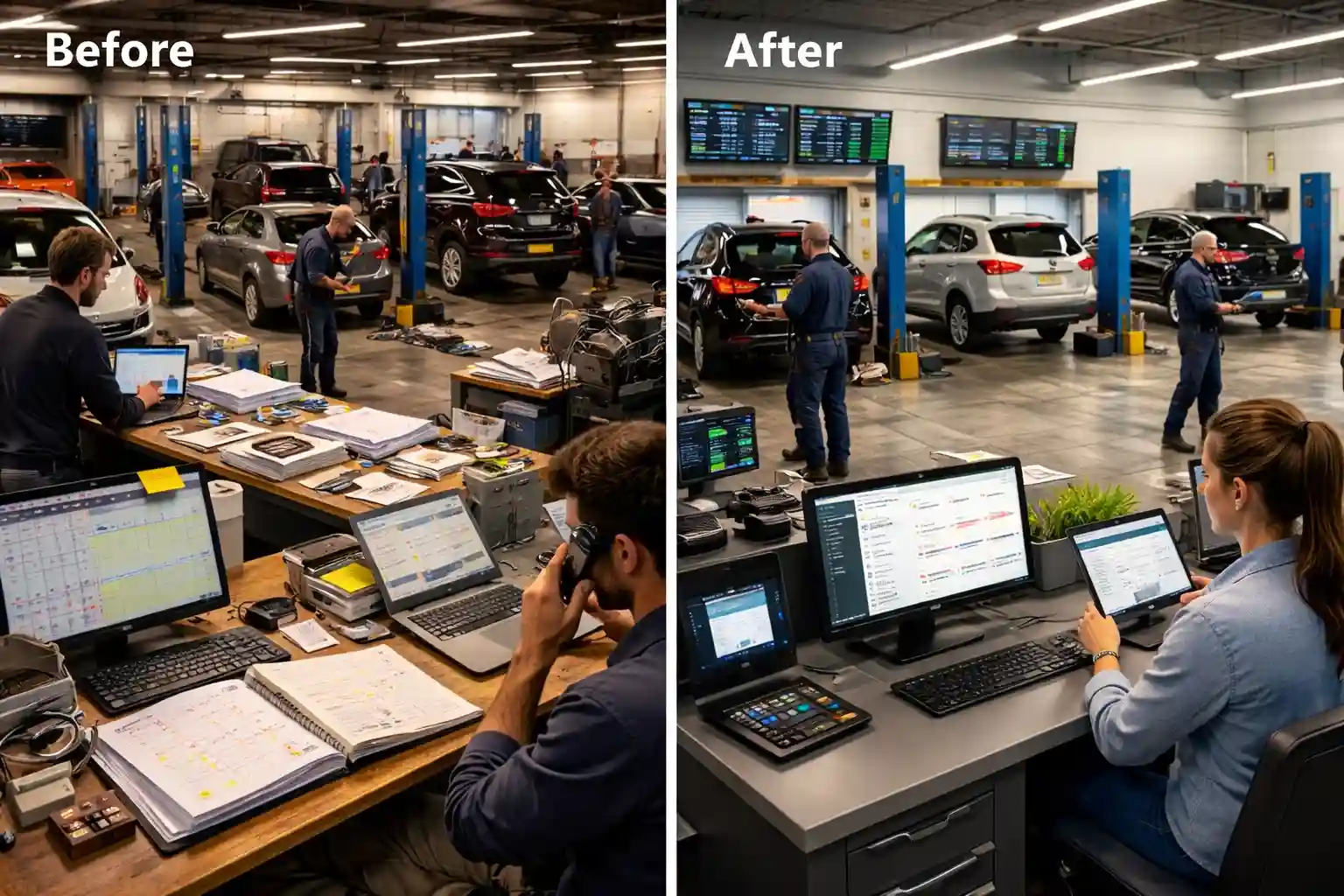
Before and After
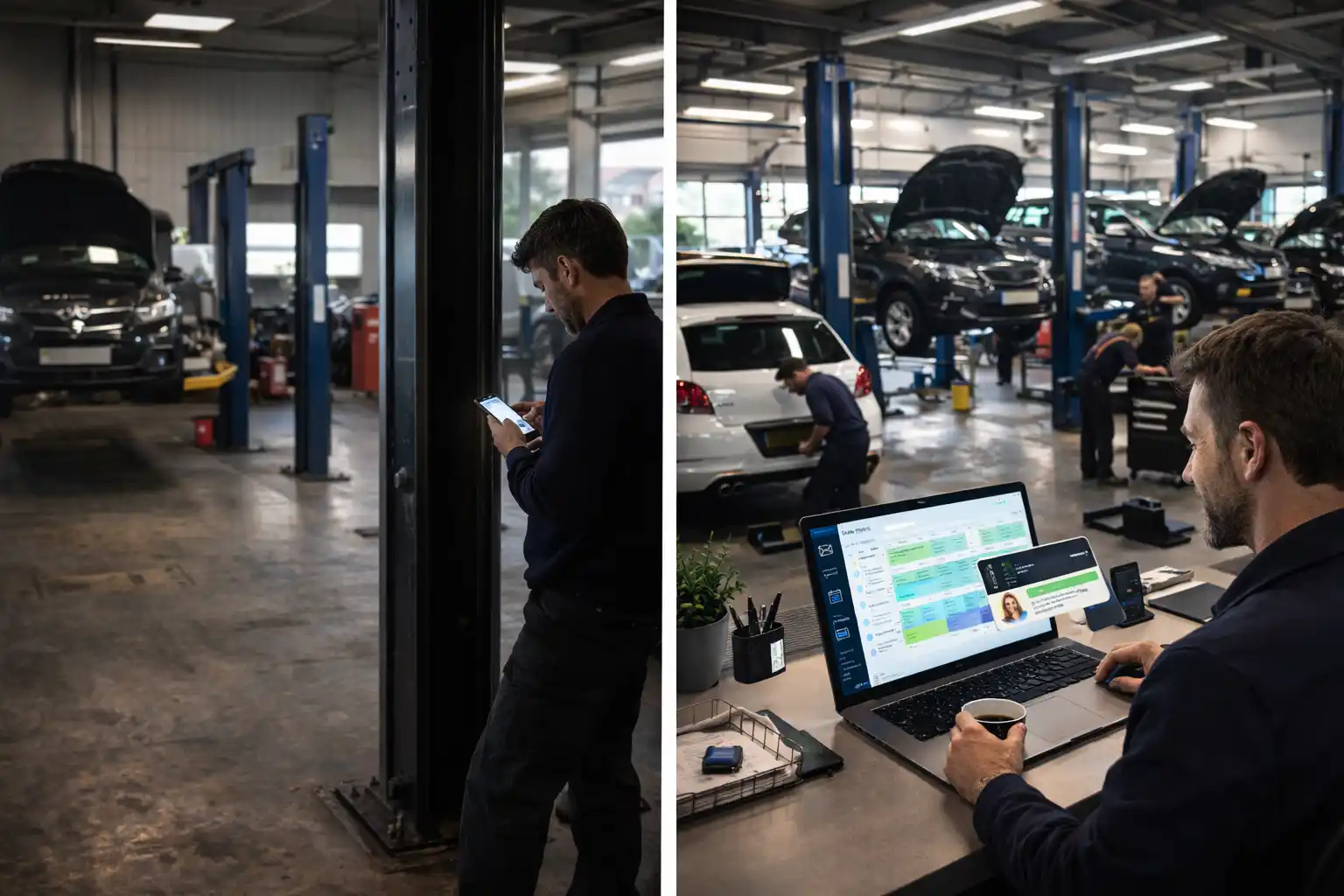
❌ Before
- Paper diary for bookings
- Separate invoicing tool — no stock link
- MOT spreadsheet updated manually
- Parts fitted but not billed regularly
- Overdue invoices chased when remembered
- No job profitability visibility
- Technician time untracked
✅ After
- Digital diary linked to job cards
- Parts auto-populate on invoices from job cards
- MOT reminders automated (6w + 2w)
- Every part tracked from shelf to invoice
- Automated payment reminders on overdue invoices
- Profit per job visible in reporting
- Technician hours logged per job card
Results After 90 Days
Revenue recovery
Parts revenue leak sealed — approximately £6,400 recovered over 90 days from parts that were previously used but unbilled. The weekly gap dropped from £220 to under £20 and has stayed there.
Overdue invoices
Automated payment reminders reduced overdue invoices by 45% in the first month. Customers now receive a reminder at 7 days and 14 days past due — no manual chasing required. Cash flow improved immediately.
MOT retention
Automated MOT reminders replaced the spreadsheet. Early data shows a 35% improvement in rebooking rate compared to the previous manual approach. Dave estimates this will translate to 40–50 additional MOT bookings per year.
Staff adoption
The receptionist was fully productive on day one. Technicians adapted within two days — digital job cards replaced paper without resistance because the interface mirrors the workflow they already followed. No formal training session was needed.
Key Takeaways
- The biggest revenue leak is the one you can't see. Disconnected systems hide the gap between parts used and parts invoiced. A connected workflow makes it visible immediately.
- Consolidation matters more than features. Dave didn't need more tools — he needed fewer tools that talked to each other. Three systems became one, and the result was more revenue, not more complexity.
- Automated chasing recovers real money. Payment reminders cost nothing to send and reduced overdue invoices by 45% without any manual effort.
- Staff adoption is faster than expected. When the software mirrors the existing workflow, technicians adopt it without formal training. Paper to digital in two days.
- ROI is measured in days, not months. The Pro plan at £139/month was recovered in the first week from parts revenue alone. Everything after that is profit.