
Built for Bays That Don't Stand Still
Live throughput dashboards. Walk-in customers in and out in 25 minutes. Counter cross-sell prompts that fire automatically. Multi-site stock visibility. The CRM built for the rapid-fire economics of UK fast-fit.
Fast-Fit Isn't a Slow Garage Going Faster
It's a different game with different economics. Throughput per bay per hour matters more than labour-hours per job. Software built for service shops doesn't understand that, and it shows the moment you try to schedule a 25-minute battery fit.
The average UK fast-fit centre runs 14-22 jobs per bay per day. That's a job every 25-35 minutes, eight or nine hours straight, with walk-ins arriving unannounced and customers expecting to be back on the road before lunch. The economics work because you're moving cars through, not because you're charging £100 an hour for one car all day.
What "good" looks like for a UK fast-fit
- Bay utilisation of 75% or higher across the working day. Anything below 60% means you're leaving money on the table.
- Walk-in conversion rate of 85%+ — the people who walk through the door should leave with their car serviced, not a quote for next Tuesday.
- Cross-sell attach rate of 35%+ on the high-margin add-ons (alignment after tyres, brake fluid with brake pads, headlight bulb with battery).
- Average ticket size 25%+ higher than the headline job advertised — the brake pad job becomes a brake pad + fluid + disc inspection ticket.
- Same-day completion rate of 95%+ — the customer who walked in expects to walk out.
If your numbers are below these, the gap is operational, not commercial. Customers want to spend money with you. The system isn't capturing the demand or the cross-sell.
Revenue per Minute Is the Real Fast-Fit Number
Fast-fit margin doesn't come from the price tag on the job. It comes from the revenue you generate per minute of bay time. A £350 service that takes 3 hours is worth less per minute than a £80 battery that takes 22 minutes. Here's what the actual fast-fit job mix looks like, sorted by what generates the most revenue per minute of bay time.
Revenue per bay-minute by job type
Average UK independent fast-fit. Job duration includes prep, fitting, customer admin, settlement. Source: aggregated UK fast-fit data 2024-2025.
The fast-fit profitability counter-intuition
Most fast-fit owners assume the highest-ticket jobs are the most profitable. They're not. Batteries and single tyres are king — high revenue-per-minute, low parts capital tied up, and almost always paired with a TPMS reset or alignment cross-sell. The £200+ jobs (sets of tyres, brake disc replacements) look impressive on the till but tie up a bay for over an hour and reduce your overall throughput.
The shops that thrive in UK fast-fit don't chase ticket size — they chase throughput. My Garage CRM's analytics show you the revenue-per-minute of every job category at every site, so you can adjust pricing, prioritise scheduling, and surface the right cross-sell at the counter.
Where Your Day's Revenue Actually Comes From
UK fast-fit demand isn't flat across the day. It bunches into specific windows that any operator who's stood at the counter knows by feel. Software that doesn't respect that pattern won't help you make money. Here's what the average UK fast-fit day actually looks like:
Bay throughput index by hour of day
Indexed to daily average = 100. Average UK independent fast-fit centre, Monday to Saturday. Source: aggregated UK fast-fit data.
The three peaks every fast-fit lives through
- 9-10am morning rush — commuters who realised something is wrong on the school run and pulled in. Highest walk-in rate of the day. The shops with online booking pre-booking these slots overnight win this hour.
- 2pm afternoon spike — lunchtime decisions and "I'll get it done now" customers. Often higher-ticket because customers have time to listen to advisory work and add to their job.
- Saturday morning (not shown, separate pattern) — the busiest period of any UK fast-fit's week. People with weekday commitments finally getting their car looked at. Highest revenue density of any hour you'll work.
How throughput-aware software smooths the peaks
- Live bay availability on your website widget — customers see "20-min wait" or "next slot 2:15" and either book or move on, but they don't waste your phone line.
- SMS-based queue management — customer drops the car, gets a queue position by SMS, comes back when bay is ready.
- Pre-booking the rush — system identifies customers due for tyres/MOT/service and contacts them 4-6 weeks ahead, securing morning-rush bookings before competitors.
- Counter capacity vs bay capacity — tells you when your counter is the bottleneck (not your bays). Most fast-fits assume bays are the limit; for many, it's the counter.
Two Customers, Two Economic Profiles
Fast-fit revenue comes from two completely different customer types: the planner who booked online, and the walker-in who realised something is wrong. They behave differently, convert differently, and need to be treated differently. Most fast-fit software lumps them together, which is one of the biggest reasons fast-fits leave money on the table.
Walk-In Customer
Online-Booked Customer
What this actually means for how you operate
- Walk-ins are higher cross-sell, lower retention. They're transactional — they're with you because you happened to be the closest open shop. Counter cross-sell is your one chance to extract maximum value before they drift back to the next-closest shop next time.
- Online-booked customers are higher retention, higher LTV. They chose you. They'll choose you again if reminded. The reminder system pays for itself on this segment alone.
- The online booking widget is a retention tool, not just a booking tool. Every walk-in you can convert into a booked-online customer doubles their lifetime value. Capture their reg, follow up by SMS 2 days later asking how the car is, and prompt them to book online next time.
Software Features Built for Bay Throughput
Every feature here exists because real UK fast-fit operators asked for it. None of them are theoretical.
Live Bay Throughput Dashboard
See every bay's status at a glance. Job in progress, ETA to free, current customer, next booking. Updates in real time.
Walk-In Fast-Track Workflow
Customer arrives, scan reg, see bay availability, give honest wait time, capture phone number, SMS them when bay is ready. Walk-in conversion goes from 60% to 90%.
Counter Cross-Sell Prompts
Every job triggers contextual cross-sell suggestions. Tyre fit prompts alignment. Brake pads prompts brake fluid. Battery prompts headlight check. The system suggests; staff close.
Live Tyre Stock + Wholesaler Lookup
Live integration with Bond, Stapletons, Micheldever. Quote any tyre on the UK market in seconds. Customer markup applied automatically based on your category margins.
Online Booking with Wait Times
Embedded widget on your website shows live availability. Customer picks a slot, syncs to your bay diary. 30-40% of bookings now arrive online for shops with this set up.
Multi-Site Stock Visibility
Run more than one site? See live stock and bay availability across every site. Direct customers to whichever site has the right tyre and an open bay.
Battery, Exhaust & Brake Job Templates
Pre-configured job templates for the common fast-fit jobs. Battery + TPMS reset, brake pads + brake fluid, exhaust + emission check. One-click ticket creation.
Multi-Stage Customer Reminders
The system contacts the customer 6 weeks before, 2 weeks before, and the day after their next service is due. Three-stage beats one-stage by 4x conversion.
Bay-Level Revenue Analytics
Revenue per minute, per bay, per technician, per site. Spot which bay is making you the most money and which one is dragging the average down.
UK Garages Already Running on This
Three real UK garages with fast-fit-style operations using My Garage CRM. Real numbers, real customers, measurable outcomes.
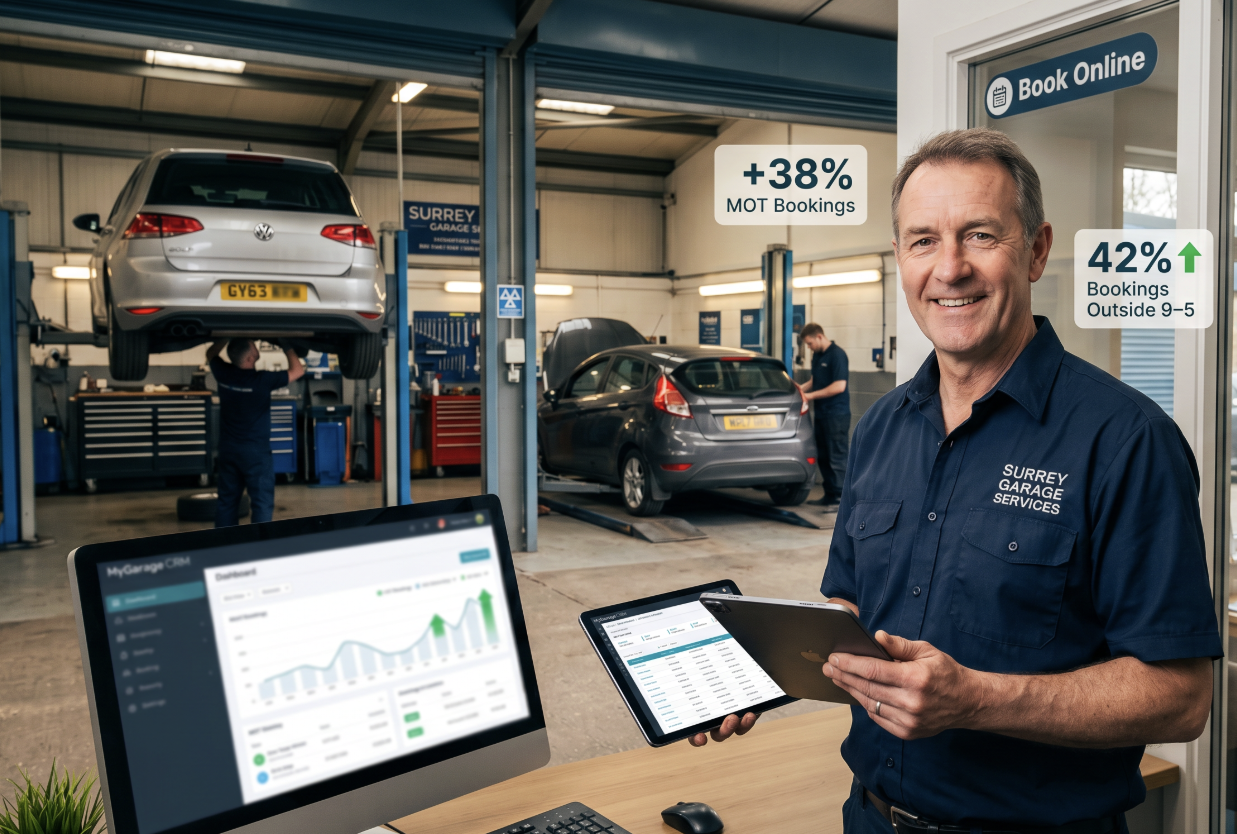
4-Bay Surrey Garage: 38% More Bookings With 24/7 Online Booking
Phone-only bookings, four to six voicemails every Monday morning, younger customers bouncing off Google. Activated My Garage CRM's online booking widget and saw 38% more bookings, 42% of new bookings arriving outside business hours, and £21,400 in additional revenue in just 60 days. Counter staff stopped answering "do you do tyres" calls and started selling at the till instead.
Read full case study
5-Bay Yorkshire Garage: £77k Annualised Revenue Lift from Pricing & Retention
The owner had been quietly under-charging for a decade. Pairing a structured rate increase with My Garage CRM's reminder automation lifted hourly rates from £68 to £85 while keeping 96% of existing customers. The same logic applies in fast-fit: cross-sell, throughput, and pricing — not headline numbers — are what build margin.
Read full case study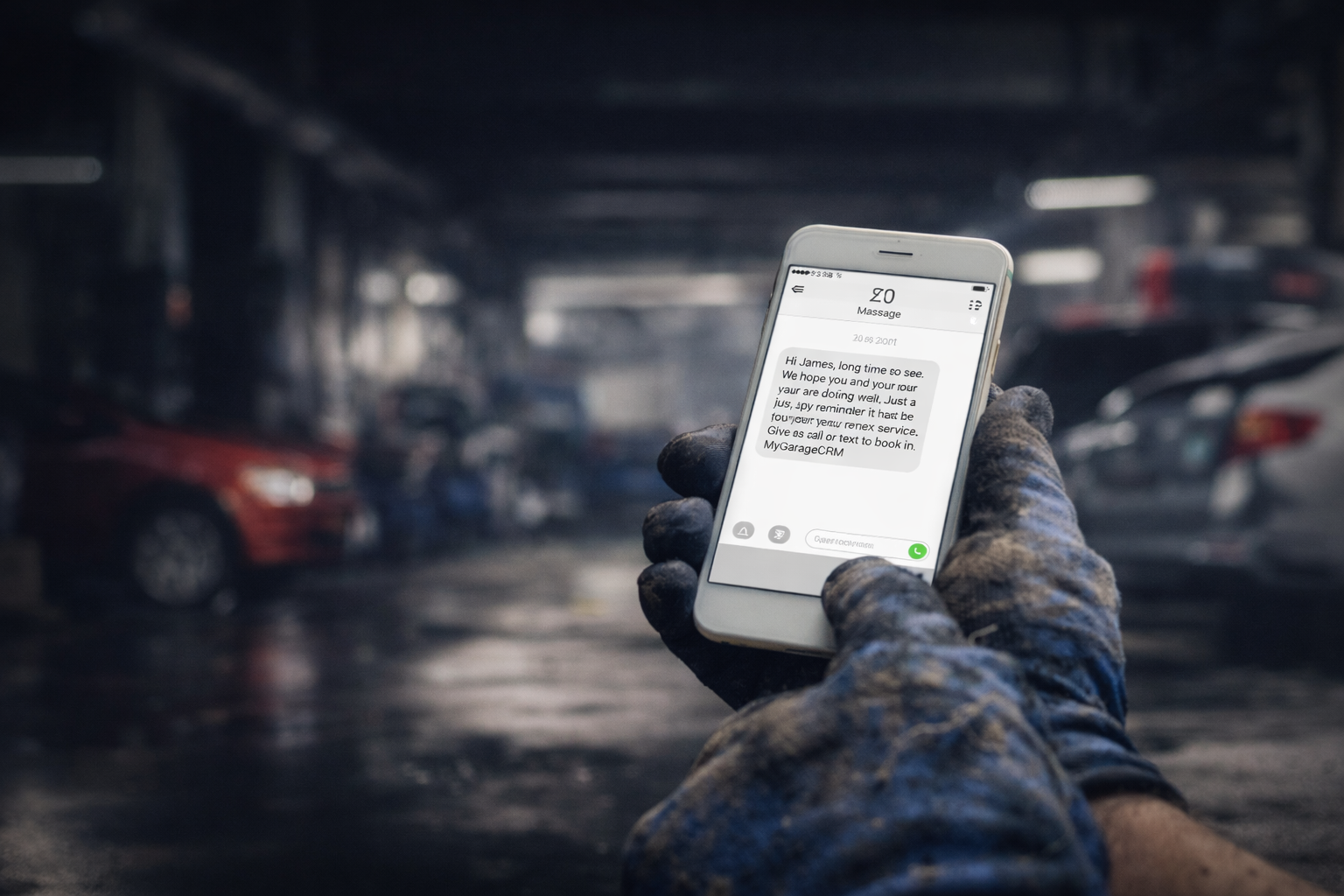
Win-Back SMS Campaign: £3,000 Recovered in 2 Weeks
600 customers identified as lapsed (12+ months without a visit) — many of them walk-ins from years prior who'd drifted to other shops. One targeted SMS, £3,000 in recovered bookings within two weeks against a campaign cost of £40. Fast-fit walk-in customers don't really "leave" — they just drift. Reaching out brings them back.
Read full case studyFast-Fit Operations & Customer Retention Guides
Practical articles on online booking, customer retention, MTD compliance, reminder timing, and the operational tools every UK fast-fit operator needs.
Online Booking for Garages: Why Customers Book Your Competitor at 9pm
Around 42% of UK garage bookings now happen outside 9-5, almost all on mobile. Phone-only fast-fits lose those bookings to competitors with 24/7 booking widgets.
Read article Customer RetentionWin Back Lapsed Customers with One SMS Campaign
Identify customers who've drifted in 12+ months and bring them back. Recovery rates of 8-15% are typical for UK fast-fit and tyre shops.
Read article Pricing & MarginUK Garage Labour Rates 2026: What to Charge and How to Justify It
Regional benchmark rates for UK independent garages. Where fast-fit job rates sit in 2026 and how to defend higher pricing without losing customers.
Read article Reminder TimingService Reminder Timing: What Actually Works for UK Garages
The data on which reminder timings convert best for service rebookings, MOT reminders, and tyre rebookings. Three-stage beats one by 4x conversion.
Read article Compliance & MTDMaking Tax Digital for UK Garages: The 2026 Compliance Guide
Every VAT-registered UK garage must keep digital records. What MTD requires for fast-fit operations and how MyGarageCRM handles VAT compliance.
Read article Cross-SellTurning MOT Failures into Repair Bookings Automatically
Every MOT failure with advisory items is a fast-fit booking waiting to happen. Most centres let them walk out. Here's how to convert them — without chasing.
Read articleCommon Questions from UK Fast-Fit Operators
What is fast-fit garage software?
How is fast-fit different from a regular garage?
Does it handle walk-in customers?
Can it handle counter cross-sell prompts?
What's the typical job time on common fast-fit jobs?
How does it handle multi-site fast-fit operations?
Does it integrate with tyre wholesaler catalogues?
Does it handle MOTs alongside fast-fit work?
How long does setup take for a fast-fit centre?
What does it cost?
Stop Losing Walk-Ins to Slower Software
Live bay throughput. Walk-in fast-track. Counter cross-sell prompts. The same operational toolkit Kwik Fit and Halfords use, available to every UK independent fast-fit. 28-day free trial — no credit card required.
No card · Setup in 5-7 days · Cancel anytime · UK support included